Loading homepage
processing
close window_close

Welcome to the IMVU MySpace importer

Do you have a myspace.com profile page? Enter your full MySpace url here to import your customizations:


This feature is still experimental, so please proceed with caution. If you run into difficulties, please post to the Bugs and Testing forum.
spacer
Deliverance
spacer
About Me
SG Deliverance Philosophy DeliveranceNow

Deliverance
Avatar since: 12/12/06

Female
Age: 26
Denmark
Last log on: 11/07/09

"Don't try this at home"

View my pictures

Hi all. I like pages where the owner says a little about themselves, so here's me doing the same. I'm Mireia from Catalonia (think Barcelona). Talk to me in Catalan, English or Spanish -or try your luck with something else- but then don't blame me if my normally vibrant and witty banter deteriorates into mind-numbingly prosaic banalité =)
My favourite thing to do is to learn, so if you know about something you are passionate for, and you feel like telling me about it, then please come talk to me. Please though, despite my avi name, don't talk to me about religion - unless you have a genuine interest in talking to an atheist, or you are a recovering Christian, or you have some reason other than proselytizing.
I'm deeply moved by beauty, in the universe, in art, in science and indeed in people. Fine poetry makes me ache, and beautiful music does much the same. I prize clarity and individuality, and I am most at ease in the company of people who are creative. If you are a bright cookie please don't be reticent to show that side of yourself to me just because we are in a moronic chat-room. On the other hand, if your politics lie firmly to the right, if you cannot identify your country or mine on a world-map after receiving a first-world education, if you think homosexuality is reprehensible, if your religion is really important to you, if you think a ball of cells is a person, if you think you have a say in what I do with my reproductive cycles, if you think that there is a natural hierarchy definable in terms of race or sex (etc etc), then surely we would have a lot more work to do to get to know each other.

Take care,
Mireia X


Instant Credit Sales
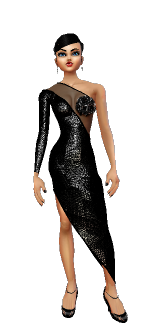
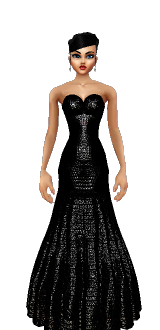
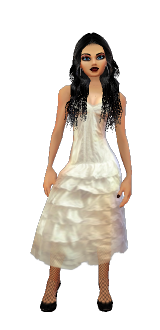
My Outfits View all
My Derivable Meshes
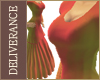
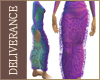
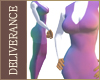
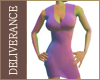
This is the original Clingy Dress. A full length tight dress that's mapped so it's easy to paint and gives excellent results.
Double Clingy Dress. Like the Clingy Dress, but with two layers of skirt.
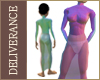
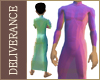
Clingy Robe. Full body tight robe for the male avatar.
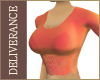
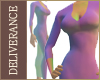
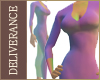
Clingy Seamless Dress. A full-body single-piece dress with a wealth of features to help the developer. No ugly line across the belly, remapped neck and arms, fixed shoulders, mesh stretched across a beautifully reshaped bust.
Clingy Seamless Dress LGC. As above, but with the dress separated fractionally from the body, for lower quality graphics cards.
Clingy Sleeveless Seamless Dress. As above but with no sleeves.
Clingy Sleeveless Seamless Knee-length Dress. As above but with no sleeves and skirt only as far as the knee.
Clingy Sleeveless Seamless Mini Dress. As above but with no sleeves and skirt only as far as the thigh.
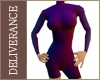
Seamless Body. The body shape on which all the Seamless dresses are based.
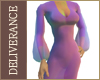
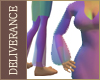
Clingy Seamless Dress with Bell Sleeves. Identical to the Clingy Seamless dress but with this elegant addition.
Clingy Seamless Dress with legs.
Clingy Seamless Dress with trousers and sleeves.
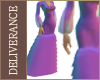
Clingy Seamless Gown. A beautiful gown mesh with plenty of luxurious folds of fabric around the hem.
Clingy Seamless Shirtdress. In corporates a meshed collar and loose sleeves.
Clingy Seamless Shirtdress with trousers.
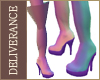
Thigh High Boots with an optional flare above the knee.
Clingy Seamless Pleated Minidress.
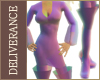
Clingy Seamless Minidress with thigh-high boots.
Cascada. Beautiful dress mesh with a cascade of ruffles in the skirt.

All the dresses you see below are derived from my DN Clingy Dress. It's one of my low break-even, robust meshes that's continuously mapped to make it much easier to work with. XXX

My Videos
My URL
My spurious and self-important musings

:::March::::::::::

Diaphanous
I guess I'm not blogging here for the time being. My mind, at present, has all the consistency of an aerosol.

:::January::::::::::

Dark Passage
Back in the day, when I had napalm blood and a Molotov heart, I also had a flatmate. She was kind and bright, calm and funny, and she had I-will-fix-you eyes and a Christ-like smile a moment away from her naturally #FF67C3 lips. The rented apartment where we lived and laughed for the better part of a year was located in the old Gothic Quarter of downtown Barcelona, behind the Cathedral, an area now given over entirely to accordion-playing morons by day, and tourist-oriented prostitution by night, at least during the summer holidays after 11pm and one last round of beer. Our cheerful flat was distributed such that the bedrooms were way down at one end overlooking the streets, and they communicated with the interior living room via a long gloomy passageway that granted us a working light-switch at one extremity only. Most nights, we cooked, dined and then talked in the living room, often for warm and memorable hours of eclectic subject matter or cleansing candour, spiced with horrid puns. She had the talent of issuing sentences like monkey-arms, that would come right around you and embrace you without prior notice. And when you yourself were the passing object of her discourse, you felt yourself regarded with acceptance and the detailed, playful fascination with which a child might look at a ladybird on her finger. When it finally came time to retire, she and I would turn out the lights and walk blindly and altogether gingerly to the other end of the hallway, often giggling at the bizarre stupidity of having to negotiate a pitch black corridor in the 20th century. We blamed Franco for building houses that only aspired to be lit by candles. Anyway, I had the habit, it seems, of starting out boldly, but as I continued along my way I would take smaller and smaller steps, without changing the rhythm of my stride. The result was that on one occasion, thinking me further ahead, she careened into the back of me. Maybe what I wanted to do was to swirl around and give her a hug or show some greater affection, but in the event I said something stupid to the effect of goddamitwhycan’tyoubemorecareful... Sigh... Out of nowhere, ten days ago, this started playing greatly on my mind. A gnothi seauton reality check informs me that this may be because of the uncomfortable image of starting out audaciously and then feigning onward progress, all of which resonates with other things that are bothering me now. Looking for resolution, I finally decided to try to track her down and make a belated apology - even, I guess, if more for myself than for her, since I have my doubts as to whether she recalls the particular event. I tried, I did, but after so many years and so many moves and phone-number changes the trail from me to her is overgrown and unrecoverable, and I simply can’t find her. So, I’m saying it here instead. I’m sorry. Yet more than sorry, what I want is that moment back. One unaccountably exquisite fact of life is that you are actually rewarded for not saying stupid stuff to people. And more than this, the universe actually pays you to be who you want to be and do what you want to do. That’s why I want that moment back. I forgot to live in it. And look what happened.

:::December::::::::::

Today
Today, I made sandwiches with quince and endives. I put them and myself into my car and drove north out of Barcelona. A few hours later I was in the high Pyrenees, next to the fictional border with France. The air there is so pure and pristine it makes you feel drunk. It’s like its atoms have just been freshly minted in a holy furnace. I parked. There was no one, not even a pebble-eyed goat, so I did my best at making a snow angel. I got a snow turnip, but what the hell. I sat on my car, and ate my sandwiches, looking out over Aragon. What did you do today?

:::October::::::::::

The Memory of Running

As Barcelona backs away from the sea, it rises. It does so gently at first, and then ever more abruptly and intrusively as it starts to climb the Collserola Sierra that overlooks the metropolis from the west. Nourished and encouraged by the passing centuries, the young city clambered over inlands and uplands, swallowing peripheral towns and villages whose bones are knowable today as muddled and tightly-wrapped knots in an otherwise orderly trestle of urban streets. Occasionally a park appears in the outskirts: the resilient legacy of some lace-garbed and smooth-skinned nobleman’s estate or an unburst bubble of arable land, trapped eternally in the city’s expanding bulk. The highest neighbourhood of all in Barcelona proper is Horta, whose name –think horticulture- betrays its bucolic beginnings. Once a small, outlying town of farmers, it was eventually surrounded and digested by the capital and was reinvented as yet another district of a rambling Latin city. It soon became a haven for working- and middle-class migrants and merchants who moved to Barcelona a century ago and more, looking, as always, for a better or easier life, if not a simpler one.

My parents bought a house in Horta when I was in my teens, and I found the neighbourhood entrancing, rather against my will. It afforded long, lazy views of the enjoyably discordant cityscape down to the harbour and of the Mediterranean beyond, and from that high perch you could watch the sunrise, or maybe the moonrise. And if you were lucky and knew just when and where and what to look for on wintery nights, you could watch Sirius –the sky’s brightest star- rise over the water, as its trifling, unlikely light reflected off a crowd of distant waves, on Homer’s wine-dark sea. In the middle-distance is the Montjuïc, a hill made famous as the stage for the 1992 Olympics, but which in early Roman colonial history may have been a site for Jupiter worship. As my younger self, I’d think about how 80 short generations ago people gathered on its unassuming summit to watch their planet-god rise, and my -how they must have drunk wine and danced and chanted as their deity rose into these timeless, warm, black skies. So, everything rises in the East, I thought to myself. And since that phrase had the gloss of wisdom to it, I wanted it to be an inspiration for a poem, a piece of prose, a song, or even simply a metaphor for something. It never happened.

It wasn’t just the view from Horta that I enjoyed so. I liked the view of Horta from the city centre below. In the years when the City Hall lacked the funds to prune the trees, these would grow riotously, and much of Horta would look from afar like a feral cascade of purring green, speckled with the warm colours of fruits, a new Hanging Garden on the side of the Collserola, a poor-man’s Gethsemane. Sometimes, above the trees, you could make out flocks of swallows and bats as they outdid one another in the race to pluck moths from the air, before flying victorious back over the sierra, to whatever century haunted the abandoned fields and farmlands beyond it. On those few days each year when ants recalled their ancient kinship with wasps and took to the air en masse, these flocks of birds and mammals would be black and thick and all but menacing, constantly reworking their airborne forms into writhing blobs and twisting filaments, perhaps the sort of shapes you might find in a 1970s lava lamp. And at those times when the trees were pruned back or leafless, the houses of Horta looked like those seating galleries that they build high up in a theatre – the gods, I think they call them- peering distantly over the spectacle of the city, hoping to be amused.

Best of all, though, was what was inside Horta. My mind inevitably turns first to a grassy park that had a maze taller than me and a bronze statue of Eros hidden at its centre. The statue boasted an attention-grabbing and –I say this with my hand on my heart- truly epic manhood that its creator must have calculated best befitted so renowned a god of love. Certainly, it proved an uncomfortable reward for less worldly maze-solvers and drew fits of amazed laughter and flurries of snapshots from the sporadic tourists who made it so far out from the ritzier delights of the city centre. I used to sit on a bench at the centre of the maze and smoke and think, and when I was done sitting, smoking and thinking I’d walk back to my parents’ place past improbable shops with 1950s signs that sold cheese and hats, or paint and lingerie, which must be what happens when boy-shopkeeper meets girl-shopkeeper and neither cares to amend their business strategy as a result.

It was 1999, I think, or thereabouts, at summer’s close. It was turning too cold to sleep unclad and uncovered, and yet there was still no presentiment of those heavy eventide rains that arrive armed and angry, with marble-sized raindrops and a hair-trigger desire to hurl them at powder-dry streets and herald the onset of autumn. It was the time of year when you wonder if you should buy red wine instead of white, and it was the time you think about last year’s autumn clothes and wonder what will serve you again, and what has been left on some aesthetic sandbank by the frivolities of this year’s fashion. That September evening, I don’t recall what the rush was. I was staring through a window and out to sea, lost in long-gone thoughts, distractedly editing my fingernails with my teeth. Dusk’s first stars appeared as they conquered the declining light of one more day.

In my Pyrenean dialect of Catalan, we have an expression for that time of day: entre ca i llop – between dog and wolf, to describe that kind of twilight, when forms are hard to make out with any certainly. The expression draws blank looks from urban Catalans, even among the well-read, but I think it goes through my head almost every day of my life - just like my thoughts of loved ones, friends, cheers and lamentations and desires, and absolutely ludicrous jumbles of replays and alternative endings. Are we the same? Or maybe all this mental flotsam is part of my personal catechism, though I have no special idea as to why.

For some reason now lost to me I decided I simply had to get to a shop or something, maybe before it closed at 8:30, as was the norm back then. Time was short and I had to hurry, so I left my parents’ house and, unplanned, I ran, maybe 100 yards to the lamppost at the corner, dipping deftly through the hanging branches of the overgrown trees. I ran, and it was perfect. Because, you see, when you break into a run there are moments in your stride when your whole body is off the ground, and you are leaping through space describing divine arcs that Newton knew. You pump the ground irreverently behind you and your whole body – legs, arms, diaphragm, spine- magically changes gear and assumes a gait and a timing and a rhythm that no one ever taught you but which you know, you just know, and whose machination is as much an instinct as the bee’s dance or the wolf’s moonlit howl. My heart pounded like it was meant to and my frail legs screamed in disapproval at my obnoxious demands as I barrelled forward. I turned the still air into dancing wind and my hair was a dark flurry behind me, recording my path like a comet’s tail or a powerboat’s wake. And when I finally stopped at the streetlamp and coiled over in shuddering, abject exhaustion, with raw, heaving lungs and trembling calves and throbbing chest, I knew that it had been perfect. I hadn’t fallen, much less given up, and I had claimed my goal of reaching the street corner.

That was, to all intents and purposes, the last time I ever ran. So I’m glad it was perfect. Health considerations took over and made it impracticable for me to run much thereafter. For the longest time I held this memory not only as an often-visited piece at the museum of my recollections, but as a model of what all memories should be like. How much better it is, I thought, to know and to remember the last time you do something important. The last time you tell someone you love them, the last time you grow your hair to your waist, the last time you stay up laughing till dawn, or make love at midday. That way, I reasoned, your memories are faultless, unsullied by nuance, unstained by creeping decadence and untinged by the inevitable fall of all things worthwhile.

But the owl of Minerva flies at dusk, and with time I have learned what I already knew: this is not better, after all. Life’s fabric shouldn’t be a stamp collection of miniature glories any more than it should be a selfish litany of regret. And anyway, decline is its own mediator, and change negotiates its own gentle grief and soothing contentment.

I’ve come to Horta, as I sometimes do, to see friends I went to school with. Today, I walked down to that lamppost, still there, still grey, but now plastered with gaudy day-glo stickers advertising locksmiths, and hand- scrawled appeals for work from a new generation of immigrants from Eastern Europe or South America, offering their services to clean houses or look after children and the elderly. The view of the city from here is changed somewhat, and my eye is drawn to new buildings and even whole neighbourhoods whose streets I don’t know and am never likely to frequent. I love this city, but as my visits have become less regular it is ever less mine, and by now it surely regards me more as the guest at its table rather than the cook in its kitchens. Multitudes have grown from children to young adults since I left and myriad other lives have been narrated to the backdrop of its streets and parks and shops. But this prosaic corner with this lamppost is mine, inalienably so, and more than it can ever be anyone else’s. It stirs in me feelings that burn at once more bitter and more saccharine than those of any other corner of the world. It brings to me that other god who was once revered right here on this sierra: Janus, the Roman god of doorways and passage, who had two faces – one to look back and one to look forward. It conjures in me sensations that are all too drunken in their intensity and defining in their influence. It makes me recall what it is like to be fuming with ire and yet hatching acceptance. Spilling over with blinding rage and yet quietly canvassing for a future far away. It reminds me of what it is to be in the half-light, between dog and wolf, or standing between two lives, on the cusp of leaving much of what you know behind, fearing a future of perceived indignity, of not being able to walk or stand.

But what’s brought me to recount this story now is something else. Today, this evening, standing on that corner, I was a thousand years older. A broad and lasting smile lit up my face as I understood something that I had never at all appreciated before, and I laughed with the sudden, satisfying, realisation. “When the student is ready,†goes the old Buddhist proverb “the teacher will appear,†and that teacher can be a person, an example, or, in this case, a metaphor plucked from the story of the city over which Horta commands such a splendid view, as it draws away from the Mediterranean and lifts itself into the Collserola where I stood. This city, over time, backed away from the sea, and I slowly back away from the memory of running. The lesson is simple, and I can carry it with me always now: When you back away, rise.


:::September::::::::::

The Causeway

This summer took me to island after island. I didn’t plan it as such, but I’m glad it turned out that way. Some islands, like Zealand or Great Britain were humungous, so much so that their islandhood is really the stuff that geographers and topologists might ponder, and has little bearing on how one feels when actually there. Other islands, such as Lundy and the Isles of Scilly were much smaller, and you know they are islands because you can’t escape the omnipresent calls of seagulls or the cleansing tang of an open ocean pervading even the most private corner or cosiest fire-lit room, and your hair feels crinkly from the salty air. But the most magical island I visited was only half an island, inasmuch as it was only an island twice a day. St Michael’s Mount, off the south-west coast of Cornwall, Britain, is a tidal island, which is to say that when the tide is in, access is only achievable by a short but often hair-raising boat ride across the choppy bay. But when the tide is out a granite causeway emerges from beneath the waves across which one can walk to and from the mainland, like a modern day Moses with the waves thrashing about on each side.

I took the boat out to the island in high winds and pounding rain, and I loved it. The island itself, only a few hundred yards in circumference, is now topped by a modest castle and a 15th century chapel, the latest in a series of constructions and occupations that stretches back in splendid pedigree to times most ancient. Indeed this little half-island may be one of the first places recorded in the whole of Western Europe, let alone the British Isles, since it seems to have been mentioned in the lost works of the venerable Greek Geographer Pytheas, who visited in the 4th century BC. Yet one can reach back even further. The island’s name in the officially extinct-and-resurrected Celtic language spoken in Cornwall is the intriguing Carrack Looz en Cooz, meaning ‘grey rock in the wood’. A rock in a wood? While St Michael’s Mount is now an island, it may not always have been so. A robust case can be made that this odd nomenclature is a vestige of a time long since when the tidal island was indeed a rocky outcrop amidst verdant Cornish woodland, when the bay in which it now sits had still not been flooded by the rising Atlantic. Other evidence supports this conjecture, such as the fossilised tree trunks that sometimes become visible in the sands nearby, when weather and spring tides conspire. In fact Cornwall has long been home to a flourishing tradition of Atlantis-esque legend, in which the flooded land is known as Lyonesse. This small and long-gone kingdom is said to amount to hundreds of acres lost to an encroaching ocean, complete with towns and their 140 churches, whose bells can sometimes be heard ringing beneath the waves on especially stormy nights. Word is, the only person to escape the watery doom was a mysterious figure who rode away on a white horse, while king and peasant alike drowned in the waves behind.

Having explored the island to my satisfaction, I walk down to a café near the shore, which offers fine views of the marvellously Arthurian-sounding town of Marazion across the bay on the mainland. For a time, I watch the English tourists take what for me is disproportionate pleasure in serving themselves tea from tartan thermos flasks. They appear oblivious to the tumbling rain and the biting wind, and seem, in their apparel, to make only the most absurdly superficial attempt at protecting themselves from such inclemency. Their focus is on the bay, and I realise they are waiting for the first signs that the causeway will appear. I check my watch. It’s 4, which means low tide is over an hour away. Suddenly I know what I have to do.

I walk down to the water’s edge where the causeway disappears beneath the unkempt chaos of the Atlantic. I attract some suspicion as I remove my shoes and stuff them in my backpack. I tie up my hair, gather my long skirt in the hand not occupied by my stick, and I wade in.

The sea is freezing as it pours over my toes. I ignore muted murmurs of scepticism behind me and keep walking, my feet finding unsought comfort in the texture of the granite blocks out of sight underneath them. On I walk, and as the waters reach up my calves I relinquish any notion of keeping my skirt dry and abandon it to the waves. I watch in delight as the churning waters seem to know more about me than I do about them, as they pull my skirt’s fabric into their own contorted and darkly whimsical configurations. I go further, making sure that of my two feet and one stick, two have firm purchase before I move the third. The waves are ever stronger and deeper, and I think about how, like love, their pull feels greater than anything one can visibly account for. A hundred yards in, the water reaches up beyond my knees and the spray confuses itself with the rain and I realise, in a flash, how happy I am. I’m in the moment, focused and uncluttered with other people’s thoughts. But my mind inevitably drifts, to thrill me with contemplations of the real peril I may be in, and this causes me to look up at the sandy shore of the mainland a few hundred yards ahead. Three men are heading out into the sea, and after a moment I understand they’re coming to help me. I don’t want them. And like a Russian doll this thought unfolds into another and makes me see that they must surely consider me a madwoman, soaked and smiling and hobbling with a crutch, alone in the writhing grey waves. They reach me and convey me to the shore, chattering at me in untidy voices about undertows and dangers and was I okay. On arrival the men lose interest in me since I’m unfriendly and barely responsive, and they drift away.

I sit on the beach and look back at the island. A new, heavier downpour begins and the winds pick up a little more, drawing rivulets of mixed sea and rainwater in the sand. I think about how the Earth’s water came hurtling in on meteorites from the outer confines of the Solar System. I think about how it once rained, not for a paltry 40 days and 40 nights as some would have you believe, but for a million glorious and thunderous years, when the Earth was baby Earth. I think about how, as a first approximation, I am water, and how I shared raindrops with every other sentient being on the planet, including you. I think about how they say no man is an island, and, although I applaud the sentiment and conclude that they are right, I feel such a grand aphorism is in conflict with a simpler truth. Sometimes, when the tide is in, you just need to be alone.


:::July::::::::::

Yuste
Joanna the Mad and Phillip the Handsome had a son who was neither. Pig ugly and drop-dead shrewd, little Charles was born in the Netherlands in the numerically tidy year of 1500. He spent his childhood frolicking hither and yon, until he turned up in Spain as its new teenage king, Charles I. These were incredible times, replete with extraordinary characters, one of whom was the incorrigible Henry VIII. Needless to say, Henry and Charles each thought the other a plonker. Henry VIII was, like Charles, a staunch Catholic, and, contrary to popular perception, he fought long and hard against the age-old currents in England that called for the establishment (or to be exact the resurrection) of a separate church, independent from Rome, in that green and pleasant land. But you know the story: Henry wanted an annulment of his 24-year marriage. The Pope was like OMG and Henry was like whatever. The reason why the Pope dragged his heels over this was Charles. Not only was Charles holding the Pope prisoner (you gotta love these guys), but Henry's soon-to-be ex-wife, Catherine of Aragon, was Charles' aunt - and it was abundantly clear that she would suffer terribly if the marriage broke up. Henry, who was slowly losing his mind probably due to a tertiary syphilis infection, declared himself the head of the church in England, providing later monarchs with the freedom to differentiate the English church from the Catholic trunk. Some of the effects of this are self-evident - from Northern Ireland to the Spanish Inquisition (which no one expects hahahaha) to protestant extremism in the United States and all the rest. But other consequences are less obvious. For example, in rejecting Catholicism, the church in England rejected iconography -pictures, basically- nipping the English Renaissance in the bud. What magical murals and frescos and Cathedrals and statues and monuments and other marvels don't stand in England because of this? England turned instead to the written word as a principal means of artistic expression, and excelled. So while, say, nearby Catholic Holland was pumping out a stream of great painters, England was not - producing instead the likes of Shakespeare. Shakespeare, who lived in the times of Henry VIII's daughter, Elisabeth I, is genuinely breathtaking, and his is no doubt the finest literary accomplishment of humanity. And I can't get my head around how or why his plays are as they are, especially as he wrote them for uneducated masses who frequented London's naughty north bank often looking for a bit of hanky-panky in the then disreputable venues of theatre houses. Certainly Catholic Europe did not produce anything equivalent, and even Cervantes or Calderón de la Barca in their most splendid moments do not parallel what Shakespeare cut from the fabric of his mother tongue. As I write this, I'm sitting in the grounds of the Monastery of Yuste, in Caceres, Spain, where Charles retired to live out his last years as a monk. Beside me on this stone bench is a large patch of lichen, which I take to be Rhizocarpon geographicum from its distinctive green colour and black edge. It is about 6 or 7 inches in diameter which, given the glacially slow rate of growth of this symbiosis of fungus and alga, means the plant was certainly alive when Charles lived here. So I wonder if he saw it. I wonder if he touched it. And whether he did or he didn't, I wonder if in his isolated monkish existence he had any dim grasp of the role he had played in shaping the world. My world. You know, if karma were audible I'd have to cover my ears in this place and grimace from the deafening clang that's still ringing out angrily across the world of man. But it's not audible, and all I hear is the soft dry wind drifting through imported maples, undocumented ginkgos and low-cut box-wood hedges. That's the trouble with consequences. Alone, they're silent, muffled by the veneer of now and camouflaged by the feeling that that's just the way it is. Only remembrance can give them voice. Remember that nothing is just the way it is, and yet everything is just the way it has become.

:::May::::::::::

Leaving Denmark
I want these streets to be unhaunted. I want these town-house corners, made of familiar brick whose texture in my hand I can conjure closed-eyed at will, to be again pristine: me empty of them, and them empty of me. I want the path by the canal to be untrodden by me, such that if I saw a new face in it, I would not be bound to ask inwardly of its owner: 'Who are you?' I want the small and sturdy bridge beneath my house to be uncrossed as it was when I first came, and I want my house to be one of any thousand faceless houses in this city, free of my DNA, my scent, my memory, my eclectic clutter of who-I-am-ness, and my aching affection. I want never to have tasted this city's sights of all and every hour and mood, nor know its quarters or its windy recesses, its clubs and arches, brothels and tourist-wrapped monuments, its docks and reservoirs and old meat- factories and stately homes. I want never to have been held here by anyone, nor seen these dapple-trunked sycamores dressed in bright white snow, and I want never to have written this on this greyed bench of rain-soaked and salt-sprayed wood, with deep graffitied carvings of someone's reclaim of someone's love. I want not to have a year's favourite seat in a year's favourite café, nor to prefer the light by one window over that of another, next to the wine-gloss re-re-re-painted front door. I want people not to know me from a black-haired stranger, to have no knowledge or claim of me, nor over me. I want never to have touched the dew-damp grass in this softly-summered land, nor spoken and thus owned the names of its counties. I want to unknow the familiar, air-brush my attendance of my overwintered days. I want to excuse myself from all recollection, and sever all sentiment and witness from me. If I can do this, then I will leave as happily as I came.

:::March::::::::::

Dirty thoughts
I have just come back from a lighting trip to Sweden, and on my return I find my flat looks dirty. Dusty more than dirty. So I'm writing this during a break from the cleaning. Now, people would have you understand that dust is mainly human skin (ew), but this piece of popular wisdom - like its friends the Inuit words for snow and the number of spiders people eat every year - is hogwash. Household dirt is, erm... dirt. Dirt dirt. Soils, mainly; which is to say teeny-weeny baby pebbles minute enough to be airborne. When the still corners of your house fill with dust the process involved is mainly geological, not biological, though biology is never far behind. Just imagine what would happen to our familiar urban settings if all humans simply disappeared in an instant. Our houses would soon fill with unchallenged dust and dirt, and this in turn would create crèches for bacteria, moulds and mites and so forth. Soon larger plants would join the party and a pioneering selection of epifauna and insects would arrive on the scene to take advantage of the new facilities. And so it would go on. There are untold hundreds, perhaps thousands of abandoned villages in my part of the world where no such imagining is necessary. Houses abandoned a hundred years ago and more are not just packaged in flamboyant foliage, but on occasion they are lifted wholesale into the air by arrogant, turn-coat trees that once found welcome shelter in the damp shade of that erstwhile dwelling. The scene reminds me of heads on spikes on some mediaeval bridge. Roots, now grey themselves and full of years, spill over foundation walls, while vines climb high and trip over themselves in the hope of finding higher purchase an inch beyond their blind, stretch-finger reach. But the image I want to draw here is not a negative one. The Buddhists know that the rocks lie until they become men, and the Christians tell of how their deity fashioned the first human from long forgotten clays of the Mesopotamian flood plains. In similar fashion I know that as my house gets dirty, this is the first whisper of nature's attempt at renewal, to breathe life into these few cubic metres that I, on borrowed time, chose to keep artificially barren. The arrival of dirt is the first step in a process that would put hippos back in the Thames and have bears roam the dense, deciduous forests of Manhattan. Think about this next time you clean something, for it's a warm, happy thought. Dirt and dust, you see, is the Earth constantly asking you to give back what is hers. She can have my house. But not quite yet. In fact she can have me. But not quite yet. So for the time being, I guess I'd better get back to the cleaning. Bye for now.

:::January::::::::::

Mise en Bouteille
The Val d'Aran is a remote valley in mountainous northwest Catalonia, and is home to about seven thousand people. The valley is remarkable, not least because it is the only place that the Aranese language is spoken, isolated and protected from the world until the opening of a tunnel in the south back in 1948. More remarkable yet is the fact that it hosts the headwaters of two rivers, only a hundred yards apart, one of which -the Noguera Palleresa- flows south into the Mediterranean, while the other -the Garonne- flows in the opposite direction toward a wholly different destiny in France. In the Val d'Aran the Garonne is a bright and humble stream you can jump across, inhabited by blue-purple dragonflies as large as your hand and little frogs that make a noise like a door closing when they croak. But the nascent river seems to know it is bound for greatness, and it dashes due north, collecting tributaries like the Neste, the Arize and the beautiful Ciron on its journey. By the time it reaches Toulouse it is a fine, rich river, laden with minerals and clays from the highlands it has left behind. The Garonne here is wide enough for boats, and indeed the Annales Bertiniani report that over a thousand years ago in the spring of 844, Viking longboats appeared in Toulouse, to the great shock of the locals, before turning around and heading back out to sea over 200 miles away. Surprisingly, Toulouse was asleep during the Industrial Revolution so the river passes through it largely untamed by canals and docks and weirs, and with this lucky escape on its mind it turns left to head northwest to the Atlantic, culminating in an estuary so wide and deep that ocean-going vessels regularly travel 40 miles inland as far as the impossibly lovely city of Bordeaux. Well, Bordeaux is where I wanted to bring you to, but I have yet to say why. The fact is that I'm in Bordeaux now, and I'm a couple of glasses of wine the merrier after a magical evening with old friends. The local vineyards that cultivated the grape for this wine are arguably the best in the world, set like patchwork across the fertile lands of the Garonne's ancient floodplain, exactly half-way between the equator and the north pole. In fact, red wine from Bordeaux even enjoys its own name in English: claret (pronounced to rhyme with 'carrot', not with 'array'). It's time for me to grab a book and go to bed now, and though I may be excessively romantic at times, I do hope the wine will afford me gentle dreams of the Garonne, and lead me back up past Toulouse where the Vikings went, and into the mountains, which I miss so terribly, with their blue-purple dragonflies and frogs that make a noise like a door closing. See you there? Thanks for reading, and goodnight X

"I can certainly see that you know your wine. Most of the guests who stay here wouldn't know the difference between Bordeaux and Claret."
John Cleese (Basil Fawlty)
Fawlty Towers


Pilar, Virtudes and Valeriana
On this very night, exactly 71 years ago, a violent storm rolled in from the Bay of Biscay, making landfall somewhere in the Basque Country to the west of the Pyrenees. Virulent and relentless, as if scripted for the events of the night, it made its way southward up the river valleys toward the high plains of Castile, flooding the terraces of almond groves and cherry orchards as it went, and making tumbling rivulets along the gravel streets of the whitewashed towns and villages below. One of the villages in its path was Poyales del Hoyo in the northern province of Avila. Back in the 1930s, it was little more than a few dozen simple rustic houses and utility buildings encircling a large 'era' or threshing floor, which people had co-opted as a central square. Then as now, a single mud road led in and out of the village, skirting the foothills of the Gredos mountains on its way to other, larger settlements in the east. In the small hours of the night, at the height of the storm, a dark van came lurching through the potholes and puddles, its windscreen wipers hardly up to the job of letting the driver see through the rain. It crunched to a halt on the threshing floor, whereupon somewhere between 5 and 10 men -witness accounts differ- jumped out of the rear and made their way in turn to each of three houses. First they went to Pilar's house. Pilar was 43, and was one of the few people in the village who knew how to read. Some months previously, to her defining misfortune, she had taken out a subscription to the newspaper El Socialista. Next, the men strode over to Virtudes' house. Virtudes was a Protestant, fifty-something, and people say she used to bathe naked in a secluded stream outside the village. Finally they went to Valeriana's house. She was 26, pregnant, and the only known grievance against her was that she once had an affair with a local man before either of the them were married. The men dragged the three women, still in their night clothes, through the torrential winter rain to a large barn where a priest was waiting to hear their confession. No one knows what went on inside. They were then forced into the van with the men and driven to a point a mile down the dirt road. Virtudes and Pilar were shot in the head and Valeriana, the youngest and prettiest was murdered in a way I cannot describe on my general-audience page. The elderly farmer who discovered the bodies the next day dug a shallow grave for them in the spot where they were killed, by the side of the road. And there their bodies lay for two-thirds of a century, until their reburial a few short years ago. The men from the van were Falangistas - supporters of Franco's fascist National Catholicism, the regime that was to rule Spain until the dictator's death in 1975. To my mind, the tragedy of Spain is not in the brutality of the deaths I have described above - they were repeated endless times all over Spain and both sides of the conflict often acted with similar inhumanity. Nor is it in the uncontroversial datum that the Fascists killed twice as many men, women and children as the opposing Communists and Anarchists. Nor even is it in the fact that the Fascists' cruelty was official - pondered, sponsored, planned and meditated for decades. The tragedy - the pain I feel for this pseudo-country, with its several nations cobbled together by bureaucrats, armies and lies to make a political fiction called Spain, comes from the fact that all the Fascists who fell have their bodies lying in cemeteries and in churches, with plaques and honours and monuments, where their families can find them and sit with them, or leave them flowers. The others, like Pilar, Virtudes and Valeriana, are still lying in shallow graves by roadsides, stuffed down wells or piled into mass graves in the forests. Still. That means today. There is nothing like this in Western Europe. You see, while Germany and Italy learned to revile their fascist dictators, to punish the guilty and to cleanse their soul, Spain decided to just hush. No witch-hunt, no finger-pointing, no retribution. Don't talk about the bodies in the fields. Don't talk about whether your father killed my father. Turn away and move on. Hushhhhhh. So, since I don't want to hush, this little blog entry is my homage to Pilar, Virtudes and Valeriana, and to all the women that were killed in the Spanish Civil War because they were of the wrong religion, because they could read, because they were educated, because they were dissenters, because they were gay, because they were bright, because they didn't like fascism, or because they fell in love with the wrong people. I think your names should be on a monument. That way, I could bring you flowers. X

:::December::::::::::

Dream
So it's March 7th, 322 BC. I'm wearing something skimpy and Greek; bright and white on my olive skin. In the sun it contrasts rebelliously with my black Mediterranean hair, blown forward over my face by a strong sea breeze. My dark blue eyes -a legacy of some Bronze Age merchant who rolled in the hay with an ancestor of mine- look out across the bay from my cliff-top vantage point. Far below is Aristotle, wholly absorbed in thought, as he draws lines in the sand with a stick, describing new geometries never before considered by our species. The Romans are coming up the beach -they're the baddies- and they're grumpy because of Aristotle's role in working out the physics of weaponry. In a panic I rush down to the sand and grab Aristotle's arm to tell him he must come with me immediately. For a moment his eyes meet mine. I know all I have is that one moment to make him understand. And I want my eyes to say, "Look, I am eclipsed by you, I worship you, I know how important this work is, I love you, I'm the only woman that will ever really love you, you don't know me, and I know you know worlds far beyond my reckoning. But now please come or they will kill you." But he shakes free and turns back to his lines in the sand. He dies because I can't shout with my eyes. I've had this dream off and on for as long as I can remember. I just had it and woke up with a start. Weird.

:::November::::::::::

Watch
I love reading old stuff. Really old stuff. I love the way someone's ancient thoughts can be portioned out and stuffed into the tupperware of written words, and then set loose to float along on the patient current of time. Time carries them far into the writer's future, and the journey is free, if dangerous and tremendously uncertain. But sometimes the current brings the words intact to our present, to the time of the writer's dimly-imagined far-off progeny, and we can read the thoughts of years, centuries, millennia ago, defying death and distance, connecting one-on-one with a long gone human. I've always thought it's a shame it's so unidirectional, though - I mean, you can't talk back to the writer. It's like unrequited love, or being a hmmm-only shrink while someone pours their heart out to you. Anyway, the next time you read something way old, at least dating from before the widespread use of artificial lighting, I invite you to look out for something. You'll find it hiding in the scattered written works of Antiquity, and lurking in the lofty tomes of classical times. It's mentioned obliquely in the few desperate scrolls and parchments that remain from the chaotic Dark Ages when the Roman Empire went pear-shaped; and you'll find it scrawled in crumbling margins dating from the church-controlled mediaeval periods that our world is still crawling out of, screaming, etched there in silence by nameless monks with gall-ink pens, damned with barren, loveless, quiet lives. In fact, it only disappears when the electric lights come on. It is as old as mankind, and may even predate us by millions of years. And it has to with sleep. It's called 'watch'. You see, nowadays we think that a single 8 hour stretch of shut-eye is the best, most universal, perhaps the only real way of sleeping - but this is far from true. Other patterns exist, the most famous being the beloved siesta, which comes from the Latin word 'sexta' meaning 'sixth', and referred to the sixth hour of a Roman's day - to be spent contentedly napping. Fragmenting your daily sleep in this fashion was once a most normal state of affairs, and can apparently be taken to the extreme of sleeping for about 15 minutes every 4 hours -a practice worth considering if only for the fact that it provides you with decades more waking hours in your life. But as I said above - what you have to look out for in the old literature is reference to the phenomena of 'first sleep', 'second sleep', and between them the period of wakefulness known as 'watch'. It seems that once, people used to sleep for a few hours, at night, and then get up and go about their business. In the wee hours, they might cook and eat and drink and talk in a sort of glorified ante litteram fridge-raiding fest that is sadly lost to our custom. And then they'd go back to bed, and sleep the remainder of the night. Well, I'm awake right now. It's 4am, and rather than call it insomnia, I call it watch, which makes me feel instantly better, and invites me to put the time to good use, such as writing my blog. I can't sleep and I know it's because I currently seem to have a number of independent misunderstandings with people all around me, and that denies me a restful night's shuteye. Either way, now that I've used my watch to eat and write, I'm almost ready for my 'second sleep'. But you should know that watch isn't just about eating and writing. Old texts tell of how in the Middle Ages the peasants came back from the fields at sundown, exhausted, and simply hit the sack there and then. And in the middle of the night they would wake up and they would make their love. And this, I think, is how love should sometimes be made. Sleepily and beautifully in the dead of night, unfettered by the full light of consciousness. I'm going to bed now to drift off with a very old book, but one day I'll have another use for these hours of vigil. I'm sure of it. Watch.

:::October::::::::::

Voyage
Fourteen ninety-seven, perhaps because of a boldness lent to people by the proximity of a close of century, of a half millennium, was a year of great voyages. Cabot left England for Canada, Vasco de Gama left Portugal for India, and the Jews left Syria for anywhere. Copernicus voyaged vicariously into space with his first astronomical observations, and Amerigo Vespucci set sail for the continents that now bear his name. For me, though, for my green, white, grey-brown, mountainous corner of the Earth, it was the beginning of a slow decadence that is still unfolding, and which has affected me this very week. You see, before 1497, Perpignan -now a smallish city on the Mediterranean coast of France- had been a gleaming jewel of southwest Europe. It was, even if rather bizarrely, the capital city of the distant island kingdom of Majorca, out in the blue sea, at a day's sailing, far beyond the horizon. That year, however, the territory fell to the Spanish crown. Catalonian independence was lost, and a frenzy of to-ing and fro-ing ensued over the following centuries until, eventually, Perpignan and the surrounding region came to rest under French control, as they remain today. In the meantime, the Catalans who lived there -of whom I am a cultural, linguistic and blood descendant- were disinherited, slowly forgetting their language and history in the cities and towns, and eventually calling someone else's past -that of France- their own. As a girl, my parents would take me sometimes in the car, down from the high scattered villages of the eastern Pyrenees, into Perpignan. As we followed the valleys downward I would press my face to the car window in awe at what I saw, since every mile forward was like moving forward in time, into scenes I felt I knew very well, but only from TV. As we drove through the large towns of the foothills, I'd gawk at faces of Arabs who had come from Algeria to work in the vineyards, and as Perpignan itself grew close, I would stare at the black migrant workers, a reminder of France's colonial adventures in Africa. Satellite dishes appeared, cacophonous streets, crowded busses full of people with rich clothes and sometimes haughty Parisian accents. 'Parihhhhhh', they would call the French capital, with a kind of gentle rasp at the end, and I practiced under my breath trying to pronounce it as they did. As we walked through the streets I would talk excitedly to my dad about what I saw. We would go into shops and my father would address the assistants in Catalan, but more often than not they would reply in French, and sometimes they would ask him please to speak in French too. Sadly, I soon internalised the idea that Catalan was a lesser tongue - speaking it was a sign of poverty, of being from the hills, of being inbred, of being stupid, of being a gypsy. Once, while in Perpignan my father asked me, in Catalan as always, if there was anywhere else I wanted to go before leaving. When he asked, I recall very clearly, there was a small group of boys, my age, right next to us, and I found myself answering my dad in French, mortified that the boys would think me some provincial villager. My dad looked at me, but said nothing. I know I disappointed him terribly. It was the first, and I think only time I ever spoke to him in that language, other than for politeness in the presence of monolingual francophone company. And how different this all was with my mother. I speak only English to her, an Irishwoman, and in Perpignan the shop assistants treated us regally -they still do- assuming, perhaps, that we were foreign tourists with lots of money to spill into their premises. English was the language of sophistication, trumping French with its exoticism. When I spoke it, I felt superior, more glamorous. I even felt my skin colour was lighter. And of my Catalan, I was ashamed. And now, from this distance, I am ashamed that I was ashamed, and I hate -and work to redress- the world that abused my childish mind into capturing and operating by such hateful, twisted thoughts. Who did this and why and how dare they? A week ago I had to write to Perpignan for some small matter of administrative paperwork. I wrote to them, of course, in normative Catalan. The reply came back that there was no one in the office who could understand it - could I please write back in French? So you see, 1497 was a year of voyages. The voyage of the Catalan language out of Perpignan started in that year, and is now all but over. There are few speakers left now. Just us. You could fit us all in a couple of football stadiums. We are the poor from the hills, the inbred, the stupid, and the gypsies. Demise is a breath way. It's not just a pity, it's a severance with the past, a passing. In the words of poet Mary Oliver "Doesn't everything die at last, and too soon?"


Cracks
Sometimes, in the morning, my eyes flutter open and find the texture on the ceiling above my bed. The cracks and ripples in the paintwork look bigger and more severe than they truly are, with the tiny relief discovered by the low, fresh Scandinavian sun. And I'll lie there, perfectly still, resisting the temptation to rub my face or yawn or stretch. If you saw me, if anyone saw me at that moment, they'd never know I had adenine where God had figured on guanine. You see, there's a typo in my DNA. A faulty manuscript that somehow got printed. Other mornings I'll forget myself and just jump out of bed - or try to. Have you ever had a cold and tried to sing? You aim at one note, and a sound you didn't expect or plan for comes out of your mouth, and you are startled by its incongruity. This is a lot like that. In my mind's eye I'm already half-standing before I realise that my legs, heavy as gold, are still more or less where they were, caught up lazily in the night-twisted bed sheets. So I take stock, sit up slowly and swivel my torso, and place my feet squarely on the warm wooden floor. I prepare to stand, unaided. Like the story of the farmer who raises a calf above his head every day, I know there will come the day when I won't be able to do it any more. But as I breathe in, a scene from a Lord of the Rings movie always appears, annoyingly and uninvited, in my head. Viggo Mortensen is giving a stirring speech to his men before battle, and he rides up and down saying something like 'There may come a day when...' something-or-other, '...but that is not this day'. And so I hear in my head: 'That day is not this day', and I rise. Slowly, and with no stick - such things have no place in the bedroom- I make my way over to the full-length mirror and look at myself. I look at myself in two ways, in turn. First I peer at my upper arms and legs with horrible, critical, disapproving eyes. These eyes would be glad, absolutely overjoyed, to find a visible hint of thinness, any whisper of wasting. The sun is their ally, obliging every dimple and fold in my skin to betray the lie of the muscle below, as I tense and relax my limbs in every possible configuration. And if these eyes find nothing, no sign that it's sooner rather than later that my body -and me with it- will have to just sit all day of every day, then I change to my soft eyes. My soft eyes look at the reflection, and wonder whether it is beautiful. Some days I almost think it is; some days, in truth, I do think it is, but the phrase 'beautiful but not desirable' invades me from where it lives and breeds in my untended psyche and violates or at best colours my search for physical esteem. Behind it, from the same hole, come its children-words, qualifications like 'still' and 'despite'. Occasionally those words drag whole thoughts behind them, and they all sit in my head together in a horrible concerto. I feel a sudden kick of urgent adrenaline in my stomach as I think of how much I have to do and experience physically. In how little time. I must elect beaches for the ever fewer summers -perhaps single figures now- that I can walk well along them. Mountains for the concluding seasons that I can walk uphill any distance from the car and feel that rightness of being alone with Nature. There are so many more cities with streets I need to stroll along in late evenings, ideally hand in hand with someone I think I have still to find - and that someone will be by my side, where I can turn my head and see his or her face, and not behind me, pushing me, while dignity no longer comes free. I close my eyes to refocus on the day. I turn away and I make my way over to my exercise bike and get on. I will be here for at least twenty minutes, so don't distract me. This is not negotiable. Not under any terms, ever. I will spend at least twenty minutes cycling, and if I am too ill to cycle, I will still cycle. Let me make myself more ill, if necessary, but the cycling stays. Some days it is easy, sometimes I think I actually fall back asleep on the bike. Sometimes I read. But some days, if I have exerted myself too much the day before, or if I have the obligation of making up for too little gym time over the previous week, it hurts. One day in maybe ten I cry. But that's really okay. I hear some women cry every day. The cycling done, I shower, usually seated after the exhaustion of the bike, like someone three times my age. And then I make breakfast. If I can I'll see if anyone is online as I eat. And then I'll get ready. I'll paint my face and by the time I'm done my arms ache with the effort of holding them up so long. But I like to look nice, and appreciate the confidence it gives me. I dress, with clothes that, if I'm honest, reflect a little vanity. Vanity that covers over the cracks of pity and fear, and, though the word play here is easy, fear of pity. I select a walking stick. The best days are the days when it has been raining, because then I can use an umbrella instead. But otherwise, I have four sticks that I like, if 'like' is the right word. I pick one, idiotically I know, based on the colour of my clothes - as if being coordinated in such a manner were somehow chic. I remember a line from a House episode: 'Does this stick make me look fat?' But no criterion other than that of colour occurs to me, much as I wish it would. And then finally I open my front door. I smile at the world. I assume my fiction that all is as it should be. And I sit in that fiction, and talk from it all day. People like a little Hollywood. Moving, plastic, paint-by-numbers leitmotifs of overcoming adversity, and having it all make you into a better, deeper, more compassionate person. It's not untrue. It does make you into a better person. But I'm tired of being seen through that lens. Muscular dystrophy is a bitch, and, just in case you ever doubted, I'd give anything, anything, for another go at life without it. I'm sorry if I've shared too much. I've had a horrid day. If you've read this far, thank you.


Me to you
This is my second love letter to you. And I do not know how to write it. I wish an exception could be made, an exemption, just for me, just for today, such that you could know the content of my heart and mind without having to perceive it through the inadequate and clumsy old glass window of my words.
Clumsy. I don't know that clumsy is the word. I feel like I'd feel if I wore expensive shoes and cheap perfume. The shoes let me follow you everywhere in comfort, and even make me look elegant in repose. Yet I fear that if I draw too close you will breathe my scent, and know, suddenly, that I am less than I appear, less than I have ever wanted to be.
And so here I stand, at the point where the forces, the push and pull, the desire and fear, the longing and the fleeing, are equal and opposite. At this place, at least, I can be at rest, quietly balanced, until another 'I love you' sends me spiralling, heady, anew.
And despite it all, I love this moment. I love now. There is nothing in the world save you, me and my will to talk of this. No future, no distraction, just this. Like running for a train. Like the moment between breathing out and breathing in. A mayfly of bliss. A moment of you. And oh I do love you. I think I love you in the way that winter gives up April, softly and inevitably. Or the manner in which people sometimes tell secrets to strangers: candidly and unexpectedly. Recklessly, even.
I can't expect you to know the magnitude of what I would trade just to make real a scene I have in my mind. Naked, we both. Your head on my tummy, like a pillow. And I'd read to you. A poem, a short story. And I'd know, as I read, that we were both in the same place, thinking like-things. One. I couldn't hope to be closer to you. And if I hold this scene in my mind, and if I dare, and if the mood takes me, I imagine myself running my fingers through your hair as I read, hoping you like it. And then our fingers interlock. And my stomach tightens. And our grip tightens. And then. Then I am lost in you. I am suddenly bold. Moved. Aroused. Yearning. Oh my love. The simple conjured image of my breast against yours... sends me, sends me, sends me. Am I saying too much? I cannot know. But I must be brave, and err on the side of speaking. Just know that this is truly new to me, this flavour of love, and its imperceptible frontier with heated passion. And I present it to you with all the innocence that comes with newness, and all the wonder that attends the unprecedented, even if this is in the tiny history of one woman.
You, my love, will know I am never lonely, since I always have myself. But you have discovered for me a new way in which I can be terribly unaccompanied. And so, softly and inevitably, I ache for you. Candidly and unexpectedly, I desire you. Clumsy but not unbeautiful in my expensive shoes and cheap perfume, right now, right here, and accepting of every consequence, I love you.

Mireia


:::September::::::::::

The Land and the Free
Mohammed -we're told- once cut off the sleeve of his tunic rather than disturb a cat that had fallen asleep on it. I'm faced with an analogous situation right now, my skirt pinned to a bench by a napping feline who has crept up next to me, as cats do, and set up shop. Alas I lack the patience and consideration of the Prophet, and the animal has only until I finish this paragraph until the slumber party is over. This heat-seeking fur-ball is one of untold numbers of feral cats that reside in one of the modern world's most remarkable enclaves, which, by chance more than by foresighted intent, just happens to be a short walk from my house. This is Christiania, Europe's largest, oldest and totally coolest hippie commune. It is a self-declared 'free-state' flying its own yellow-spotted flag and operating under its own rules, underpinned by the maxims of peace and free-love. There are no cars in Christiania, and the buying and selling of property is absolutely prohibited - people are allotted space according to their requirements. Governance of a kind is executed through a weekly assembly representing the 800 or so people who live in the scattered, often exquisitely painted dwellings strewn across what was once an abandoned naval base in the heart of Copenhagen, and is now verdant woodland and gleaming lake. Indeed, its very location is a source of simmering trouble. Evermore, the powers that be appear to have their eye on all that lovely real estate plonk in the middle of the capital city, and this has induced the commune residents to close ranks and show their teeth. Recent riots hit the international news after officials went in to close down a centre there, and the streets around my home still show the scars of molten tar where the residents erected flaming barricades along their borders. For what it's worth, I like it here tremendously, inside Christiania. The people, by and large, are overwhelmingly kind, and as my now local face has become more familiar to them, I have had ample demonstration that they genuinely believe in and act in consequence with the flower power principles they extol. Despite the perennial squabbles with the government, Denmark in general is a fine country, and I deeply admire the importance given to real freedom, so very unlike the drum-beating overtures made to it in many other countries. Time magazine (September 17, 2007, p14) reports on the findings of the Worldwide Governance Report, which ranks countries 'according to the amount of freedom citizens have to voice opinions and select a government.' While the USA comes in a sobering 35th place in the world (please guys, take stock), Denmark comes top. I'm not surprised at this supreme ranking. It is this kind of consensus feeling that people should do as they will that allows Chrisitania to survive and prosper. Of course Denmark has hit the headlines recently for quite another matter - that of the cartoons depicting Mohammed. I'll avoid sounding off on the subject here for concern of stepping on the IMVU TOS, but I think it fair to say that an attempt to describe the abyss between the two cultures in conflict would leave many groping for superlatives. I lack patience with oppression in any guise, and even this cat has nailed me to the spot for quite long enough. In a moment I'll push him gently away, and walk back home through the woodlands of Christiania, offering a smiley 'Hej!' as I go to admirable people who have the substance and conviction to remind us, without posturing or fanfare, that life can of course be lived in may ways, but is best lived free.

:::August::::::::::

New World

My word. Now that was what I call exciting. I write this returning home, hurtling along, splashing through time zones over the North Atlantic. I'm a mile up in the air, and slightly nauseous, on my flight back to Denmark. I think it's the thrill. I'm exhausted and affected after a thrilling two week trip to the Americas, and I've come away with extraordinary memories and a rather good job offer, which in all likelihood will have me returning soon as a permanent resident of Chicago. But that's all by-the-by. Lemme tell you about my trip.
I flew in to Chicago and followed the idiot-proof signs to take a train to somewhere in the city centre. I got off the train and after looking around I decided I was officially clueless and so I stopped a random American in the bustling street with a request: to point me in the right direction to continue my journey. If you do this in Europe you either get a concise and unobtrusive response or you are presented with a series of questions about where you come from, what your business is, what age you stopped wetting the bed. But this particular (gorgeous hunk of a) guy came through just right, Goldilocks-style, answering my question (which way was the lake?) and going on to inquire as to where exactly I needed to be. He then gallantly pulled my suitcase for a block, manifestly secure enough in his sexuality to be undaunted by the tasteful bubble-gum pink finish.
The number 6 bus was packed to the gills and beyond. Intrigued, I noticed that being on the number 6 is a good predictor of one's ethnicity. If a human is on the number 6 in Chicago in August 2007, a significant portion of his or her genes is most likely to have spent the Pleistocene south of the Mediterranean. On the other hand, number 6 bus rides seem to say nothing about one's age or sex. I have yet to ride number 6's in other cities, so I don't know if this applies generally. Either way, the bus driver kindly indicated to me that the Museum of Science and Industry was coming up, so I hopped off.
And there it was. Lake Michigan in all its glory. I scurried my way over to the waterfront and peeled off my dress with gay abandon, to reveal a last season's KC bikini which I had been cunningly wearing underneath my clothes all the way from a grotty airport toilet in Munich. Off came my shoes and in I splashed. It felt so good in the lake it should probably be illegal. When I eventually crawled out of the water lung-fish-style I lay for a while belly-up on the sand. My jet-lagged body was screaming at me that it was midnight, while the hot 5pm sun was soaking into my bones. Real what's-wrong-with-this-picture stuff. Priceless. Yes, I had arrived in America.
I have an old friend who works in the aforementioned Museum of Science and Industry. We studied Linguistics in London together back in the day. I moseyed on over to the Museum and rooted her out, and once the hugs and catch-up stories abated she asked me why I was soaking wet. I explained that I'd been swimming in the lake. She took one step back and ew-ed, explaining that the lake was grossly polluted - something to do with bird-pooh. I can't recall the exact superlative, whether it was the worst lake, the worst day this year, the meanest gulls or what, but I do remember that it was all pretty horrible and I knew I needed a shower fast. She took me to her place, handed me a glass of enthusiastically overpriced Spanish wine and I promptly fell asleep on her sofa, complete with my coating of bio-hazard gull-droppings. Ick ick ick.
The following morning I did Chicago stuff. I went up skyscrapers, checked out the architecture and whistle-stopped the main attractions. In the afternoon I met up with a journalist friend of mine. She and I first met quite by chance when she was covering the Pope's visit in Valencia, and she stayed in my house for the duration. I was excited to learn that later that very afternoon she was going out on the lake in a big ole sail boat belonging to a certain local politician -would I like to come along? Hell yeah. Now while I know you know that Chicago is the 'Windy City', you may not know that this appellation has little to do with climate. Rather, a New York journalist coined the term with reference to what terrible 'wind-bags' Chicago's political elite are. This, for what it's worth, was also my experience. And now they have yachts and perfect day-glo white teeth too. The view of the city from out in the lake, though, is truly breathtaking. It reminded me, incongruously, of the view of the high-rise Hades of Benidorm, seen from Benidorm Island.
Still jet-lagged and dazed, I had to leave for Omaha, Nebraska, the next day. Omaha is about as far away from the sea as you can get anywhere on Earth. In that sense Nebraska is to North America what Chad is to Africa. Omaha owes its success as a city to that very centrality - hosting, as it does, Strategic Air Command and a bunch of nuclear missile silos. An American flag is, if not obligatory, then standard fitting outside the patriotic houses of Omaha. Downtown is an empty and rather ugly hull, and the surroundings are smothered with strip-malls and acres of parched parking lots. The whole, I found, was unattractive. I spent several days in Omaha giving a course and hanging out with a few fine academics who invariably displayed that boundless generosity to me which one often finds in Americans. Sometimes, a bubbly and delightful shopkeeper would engage me in lively conversation, usually beginning with an inquiry about my accent (when speaking English my accent is Irish), but in general I felt foreign and lonely in Nebraska, and the days passed slowly as the unrelenting cicadas screamed their horny prowess from every tree.
To help me pass the time I went on a few outings hither and yon. First, I went to the Durham Western Heritage Museum. Well worth a visit. The section on the War of Independence was enjoyable, if peddling an expected bias. No mention that said War cannot be properly understood without perceiving it as a civil war, in which brother fought brother and each side was sponsored by a different state (France or England); no mention that the Boston Tea Party was an example of big business starting wars for profit (Iraq, anyone?); no mention that the outcome was an absolute unmitigated calamity for African and Native Americans. Speaking of Indians, the section on the Omaha Indians was similarly skewed. Lashings of white liberal guilt mixed with misunderstanding. Not mentioned at the Omaha museum is the fact that the Omaha Indians were so shattered by repeated cycles of disease and ill-treatment that they actively decided to go into suicidal battle to kill themselves off and end their millennial history, rather than live in such wretched misery and subjugation. They made their own choices to the very last, and simply re-telling the old 'living lightly on the land' story hides that sobering and proud fact and affords them no special dignity. Anyway, all this is not a criticism - if you left a Museum of Catalan History in my hands I don't suppose you get a very unbiased picture either.
My high point in Omaha was to be an open-air concert. The Plain White T's were playing Memorial Park and I went along. Unfortunately, after the warm-up bands had done their thing an extraordinarily violent thunderstorm happened along. People went hurrying into the toilets for shelter and peered out at the rain like barn animals. I didn't find that idea very dignified so, already soaking wet, I sat under a tree with a Dostoyevsky paperback, no doubt looking cool and interesting. No sooner was I comfortable than a spotty kid came by and told me merrily that during the 4th July celebrations someone had been struck by lightning while standing under that very tree. I decided to move on.
After a few days in Nebraska I had to go down to Little Rock, Arkansas. In an effort to fit in in the Confederacy, I rented a white Chevy pick-up to drive down south in. At first, driving an automatic (no gear lever) freaked me out entirely (the damned things move forward as soon as you take your foot off the brake - stay still, dammit) but later I found there were advantages to having a whole arm free your entire journey. One might variously drink, eat, scratch and groom oneself or otherwise make offensive hand gestures at other drivers. This last is especially useful in Arkansas. For some transient indecisive driving on my part, born of not knowing where in hell I was going, I was called a 'f***ing tard' by a gentleman driving a Chevy not unlike mine. On seeing that he was addressing a lady he modified the epithet somewhat to 'tard bitch'. I was so utterly taken aback that I missed the moment to produce a sharp-tongued witty come-back, but I entertained myself thinking of what I might have said in response all the way to the state capital Little Rock.
Little Rock itself is, if I can be forgiven for voicing so brash an opinion, singularly unlovely. I don't know whether it was the crippling heat, witnessing what passes for food at an institution called 'Denny's', or seeing road-kill used as baskets, but it really is a corner of the world I wouldn't want to call home. The exception, as so often, was the people, who were profusely welcoming and warm. I went to a Mexican restaurant called Señor Tequila where I was treated regally by the Mexican staff (who had rarely heard a Spanish accent in Spanish, let alone the caramel tones of my Catalonian one, and apparently found it endearing). In general, I find, waiters in America are an extraordinary group. They always seem climactically happy that I have actually chosen to sit at a table under their watch, as if my mere presence in their restaurant had revealed to them the cosmic godhead. They laugh way too loudly at my jokes and at times I suspect them of Prozac abuse. I don't see how else they could be so effervescently obsequious on minimum wage. But then again I come from a country where to get a waiter's attention you have to marry into the family.
Anyway, at Señor Tequila, I saw another lady eating alone with a small child, so I struck up conversation. Black and radiant with that beautifying glow unique to the pregnant, she gave me her take on life in Arkansas, local and personal history and racial tension. I told her about Catalonia and Denmark and my visit. Our conversation not over when the restaurant closed, she invited me to dine at her place the following day. I found her house with some difficulty, but was treated to a unique afternoon of rich and unfamiliar foods, illuminating conversation and attentive company, and to boot, her younger sisters corn-rowed my hair and did all kinds of funky stuff to my nails. I had absolutely never looked so cool and knew that looking like that no one in Arkansas could possibly dare call me a tard bitch anymore.
While driving back from Arkansas I heard about the Peruvian earthquake on the radio. In a flurry, I called my journalist friend in Chicago and learned that she was flying out there the next day. I got on to the editors at the two publications I write for in Catalonia and told them I could be in Peru shortly if they could pay for my transport. The previous sentence actually makes it sound like I didn't beg a little. A lot actually. The upshot is that they agreed and I went. Well, the scenes I saw fill my head every time I close my eyes, and I've written about that elsewhere. It certainly wasn't my dream first visit to Peru, in which I had imagined myself roaming the Nazca Plateau and canoeing across Lake Titicaca into Bolivia. In Peru I had my bag stolen, with all my money and notes and sundry whatnots, and well as all my clothes. My only regret is that I wasn't carrying more cash and my only hope that the taker was the neediest rather than just the most shrewd. I also lost a walking stick in Peru, which, you can believe me, was a real, real bummer. Initially I compensated by employing a shaft of wood as a staff, which made me look like something out of the Old Testament, an air accentuated by the scenes of destruction around me. Before leaving I appropriated a length of wood from what was once the roof of some poor bastard's home. I'm having it treated and fashioned into a new stick in Denmark.
Back in Chicago, and rather crestfallen from our Peruvian experience, my friend and I decided to drive up to Milwaukee for their annual 'Irish Fest', a kind of cultural fair celebrating the Emerald Isle. This was hilarious. I wasn't sure whether to consider the whole affair some risibly hopeless parody of 'Oirish' folklore, or a legitimate expression of roots by the descendents of Irish immigrants. Both maybe. At different points in the afternoon, my Irish accent earned me a free coffee and a pink baseball cap with 'Irish Princess' emblazoned across it. I wear it with pride as I write.
In my final days in the New World, I flew down to Mexico to cover the hurricane. That was scary, but despite the nasty consequences, I admit to a deep love of extreme meteorological phenomena. I used to drive down to the south of Spain alone just to watch end-of-summer storms roll in from Africa, or sometimes, if the tempest struck at night, I would go and swim in the rain in an abandoned reservoir in the orange groves some 10 miles inland from Valencia. Regardless of my profound attraction for such things, certain responsible people get grumpy with me when I say I want to see a big-arse tornado, but I do. The power electrifies me to my core, and I relish seeing my planet so very alive. In fact, when I sent in the story about the hurricane to my editor, normally a most compliant individual, he told me to re-write it - it sounded like I was in love with the storm. He was right.
So here I am, barrelling through the skies somewhere near Iceland. It really has been an exhausting two weeks. I started by saying that I'm going 'home', but I've flitted around the world so much that I'm not quite sure what 'home' is for me now. The Pyrenees, Barcelona, London, Rome, Valencia, Denmark, and now the States is calling. I don't think I need a fixed abode, but I miss a certain constancy of people in my surroundings. I miss that library of shared experience you can call upon with people you have known for a long time. Maybe that's why I like IMVU. You guys are always there, no matter where I go. Time to catch up on a little sleep. Thanks for reading. Catch you later, and I hope to see you online. X


Away
In a few hours I'm headed out to the airport, there to take a plane to Chicago, where I'll be staying (not counting excursions to Nebraska and Arkansas) until late August. Wake me up when we get there. Besos a todas y a todos, Mireia XXX

:::July::::::::::

Pirenaica

Quickly. Give me your hand. Put it there, on my chest. Do you feel that? How it's racing? You see, after spending time in the lovely but oh-so-flat land of Denmark, I am very thankful to have an excuse this weekend to visit a village near the town where I was brought into the world. I love this place with a passion that transcends any telling, but I'm going to try, because I want you to see what I see.

These are the Pyrenees. On a map, they draw a neat division between France and Spain, reaching from the Mediterranean coast to the Bay of Biscay in the Atlantic some 270 miles away to the west. They were thrown up in the Tertiary period, when Iberia smashed into the rest of Europe and buckled upwards at the edge under the inexorable pressure. A slow motion car crash, on-going, at the rate that fingernails grow, writ large upon the earth. Unlike other European mountain ranges, there is an almost total absence of great lakes here, and the altitude and rarity of passes is unheard of for such a great chain. But there is a large abundance of torrents, particularly on the French side, that form waterfalls high up in unreachable ravines of silver granite, and which can be heard sometimes when the wind brings their voice to the limestone valleys far below. Once, these mountains marked the end of Europe, and people spoke of Africa as lying to the south of them. Now they mark the end of nothing, and they divide nations like the Basques or the Catalans into different States, cutting them into humble pieces and weakening them as the centuries roll past. Other countries, they nourish and protect, like little Andorra that crouches in a single valley between its more powerful and bellicose neighbours, and which became so lost unto itself that it remained a feudal state until a generation ago.

The best way to see them, to capture a little of their grandeur, is not by walking their slopes or skiing, or even by being particularly close to them. The best way, I think, is to take the train at dawn from Port-Bou north across the border to Perpignan. The mountains are distant, and they glow bright shades of magenta as the new sun reflects off their snowy peaks. They are so remote that, in the early light, the blue of the sky is not just above them and around them, but below them too, and the burning mountain tops look like floating islands of fire held up by some divine hand in the firmament, little pieces of blazing purgatory loose in heaven. Another way to see them, again without touching them, is to fly over them. This is best done at night, and preferably when there is no moon. Sometimes, from the plane, you can see the very stars reflecting off the ice, but mostly everything is black except for the amber lights of towns and roads that sprawl in tortured shapes along the valley floors. The lights look like embers smouldering in black coal, and the darkness between them is tangible and infinitely present, like the precious, ancient rock itself.

If you come here, and you want to touch the mountains, then please do. For my part you are very welcome here, and if I find you, I shall invite you into my house, and cook for you, and give you a bed for the night. In turn I will ask you about the distant lands and cities you come from, what you do, and why you do it. If you ask me, I'll tell you what it's like to grow up here, in this long mountainous corridor of limestone, granite, meadow and ice. This, I will explain, is a world that never had a Middle Ages: fast sports cars hurry down the twisting roads to buy cheap tobacco or Viagra in Andorra, as if excusing the horses and mules that they overtake in their haste, pulling carts full of dates and almonds from the valleys. Sometimes, the horses are old and arthritic, and sometimes they are even the last of their family, or their race, the last in a line of horses with a pedigree so perfect it reaches back to the times when man first brought them here, millennia ago. In this world of old and new, the goats, I notice, are calmed by MTV, and when people occasionally make scarecrows, they use Coca-Cola cans on horizontal sticks for the bobbing hands.

But even though you see signs of your world here, you will never know this land, not truly. You have to grow up here to know it. As a child, you have to have watched a cloud heave up and spill over a mountain top, and release its snow as the peak appears to puncture it, causing a long, fatal gash in its belly. And when the cloud begins to snow, it retracts slightly, recoils, as if in pain from the wound, and then gathers strength once more and tipples over the rise, perhaps into another country. You have to have watched the seasons turn, and seen spring wash up the slopes leaving a carpet of wild flowers behind it as it climbs, like tiny stars in the wake of a magic wand from a child's story. You have to feel how the summer rises from the valley floor and how the winter descends from the peaks, and how this up-down motion is a pulse of life as true and exact as any beating heart. As a child you have to have run up a mountainside to find the exact point where two neighbouring peaks appear to be in perfect alignment. And there you would leave a stone or a coin in the tall grass, and vow to use the alignment again one day to find the exact same spot anew, and recover the object you left. As a youth, you have to have climbed hundreds of feet to look for a lost goat. And when you found it, stranded on an inaccessible ledge with a broken leg and unable to descend, you need to have taken a rifle and shot it, and watched silently as its limp body tumbled into the clouds far below. You need to have seen summer tempests from above, and have watched the unruly clouds bustle into the valley beneath you like schoolchildren eager to explore every corner of a new room. You need to know not just the names of the mountains and passes as they appear on maps, but the local names, and you need to have named places yourself: little places like boulders, caves, and small ponds that appear one year when by some whim of nature a mountain stream adjusts its course. You need to have heard the old people remember their grandparents' tales that the Sun used to be just visible at dawn at a certain point on midsummer's day, and then realise that they have witnessed precession, the slow wobble in the orbit of the Earth itself, barely detectable as the aeons pass by. You need to have eaten the snow, and picked oranges from the trees, crushed almonds to make oil. You need to have pretended the mountains are everything: boats, whales, monsters, buildings in a city. You need to have sat motionless on a hot autumn day and heard the cooling sound of a torrent from high above you, knowing you could never find it if you tried.

And if you say to me, now, yes, of course you can feel my pounding heart - but isn't that from the steep climb we have just made as we spoke, from the thin mountain air, from the exhaustion of my tired legs? Then I will say yes, you're right. And I'll know you have understood nothing.


Qui uenit in nomine Poloniae
In the year 20BC, two Indians travelled to Athens. One was a Buddhist philosopher, and the other a cultural ambassador. We know of the visit because the philosopher, in a scene reminiscent of a Rage Against The Machine album cover, took it upon himself to self-immolate, and his tomb became a gruesome tourist attraction of Antiquity, noted by many historians of the age. Word of the famous event would no doubt have reached Paul, and may be what he refers to obliquely in his first letter to the Corinthians: "though I give my body to be burned, and have not love, it profits me nothing." In fact, at Paul's time, Buddhists had been wandering all over the Middle East for many a century, and it is not surprising that a few aspects of Christianity should be born of its ancient influence. Indeed, the very idea of monks may ultimately be of Buddhist inspiration. Ideas that travelled from Far to Middle East often suffered mutilation on their westward way. For example, the grotesque (and philosophically and legally insupportable) notion that just thinking something bad is as wicked as actually doing it appears to be a corruption of the Buddhist concept that thought generates karma and thus has consequences. But the finest example of Buddhism-meets-Christianity goes hands-down to my man Saint Josaphat. Josaphat, so the Christian legend informs us, was a prince born in northern India, the only son of grumpy Christian-hating King Abenner. When Josaphat was born, astrologers gave his father some good news and some bad news. On the upside, Josaphat was destined to become a great man, while on the downside, he was to become a Christian. King Abenner freaked, and to forestall his son's conversion to Christianity, he kept the child inside the palace walls, surrounded by luxury and opulence. When Josaphat became a young man, he finally left the confines of the castle, and was shocked by the suffering he saw all around him. He met a monk, became a Christian, and lived the remainder of his life as a recluse. This story was extremely popular in the Middle Ages. In fact the Golden Age Spanish playwright Pedro Calderón de la Barca even re-wrote it, setting it (weirdly) in Poland, and thus created his greatest and most famous work, Life is a Dream. But when the Buddhist scriptures were finally translated into European languages in the 19th century, there was a widespread and glance-exchanging you-gotta-be-kidding-me moment. Josaphat's story, minus the Christian bit, is clearly a re-telling of the biography of the Buddha. Even the very name 'Josaphat' is a Middle Persian corruption of the word 'Bodhisattva'. Succinctly put, the Buddha is a Catholic (and Eastern Orthodox) saint, complete with churches dedicated to him and a feast day in November. I'm delighted that the Buddha's life story can still be distinguished in Christian lore, even in this obscure, re-edited form. As Paul himself went on to say in that same Corinthian letter, "we see through a glass, darkly."


Septentrional
It's all but midnight. I'm peering through my misshapen kitchen window at the unflagging rain that has accompanied me almost since my arrival in Denmark. Strangers walk past in the street below, heads uncovered, oblivious. I'm slowly coming to appreciate that rain is quite different up here, in the north. In the Mediterranean, rain-wet cities look back at you in quiet, grey embarrassment, stripped of their happy protagonism. Here, though, rain is not an occasional disinherited visitor, but an intimate aspect of the scenery, a player, and the cities and their people look comfortable in it. The rain, I've decided, turns up the contrast and resolution settings of my surroundings, making them lucid and reflective; closer, even. So much cloud, however, takes the stars away, and I find that unbearable. I spent an infancy beneath the nightly brilliance of a sky seen from soaring mountains and far from city lights, and such a display is well missed. But what brought me to my laptop a few moments ago to write this is that a small break in the cloud cover has taken pity and thrown me a handful of stars. Shining north and low in this last hour of June, I take them to belong to Ursa Major -the Bear, also called the Cart, the Plough, the Big Dipper and so forth- but I won't be sure until I can see some more sky. I do hope it is the Bear -no, not just because a few wild bears still roam my Pyrenees, though I feel an affinity, even if invented- but since this may be the oldest constellation ever recognised by humankind and I happen to think that's cool. Walk back in time with me. The 88 constellations we now officially recognise in the West were established in 1922, and they are based largely on the work of Ptolemy, writing in 150BC. Ptolemy's constellations can be found in an earlier Greek poem, (Phaenomena) dating from 275BC, which, in turn is extracted from a work by Euxodo, from about a hundred years earlier. Follow the trail of the Bear back further yet in time, and you arrive in Mesopotamia, and this is where you see why the correspondence between the constellations and the animals and figures to which they supposedly conform is so unequivocally half-arse: those icons were in common use in Babylonian culture way before someone thought to find their shapes in the stars. The Bear, though, (along with four other constellations, the Pleiades and three isolated stars) is indeed mentioned in a single early clay tablet dating from 1700BC, of dizzying worth to our species, and now, I believe, lost in the looting in Iraq. You can go back even further. You see, the fact that the Bear looks absolutely nothing like a bear is key. Native peoples from all over North America also traditionally recognise a bear in those same stars, followed by the same three hunters. This can't be a coincidence, and late borrowing can be ruled out, so the first humans to reach the New World saw the bear in the sky. Even at conservative estimates, that means recognition of the constellation is at least 12,000 years old. It may actually be spectacularly older, given widespread evidence of shamanic bear-cults in prehistoric Europe. But even at 12,000 years it is still much older than the difference of colour between my bronze Mediterranean skin and the pigmentally-challenged blond folk that are walking by in the rain outside, since evolution throws up these dermic differences in a mere few thousand years in response to local climatic conditions. Climatic conditions. The rain patters on and the hole in the clouds has healed itself. But at least I know the Great Bear is there, even if obscured. It always has been. It's older than skin. Goodnight.

:::June::::::::::

Denmark
I am scared and happy. I've moved from Valencia in the Mediterranean to Copenhagen in the Baltic and my head is spinning. First impressions count for much, and the evening I arrived here there was a generalised hullabaloo that I hadn't expected. It transpires that Denmark lost a football (soccer) match to neighbouring Sweden because a Danish fan ran out into the field and punched the referee. What I know about football I could write on the back of a postage stamp with a thick crayon, but I admit to a sneaking admiration of this Scandinavian plonker because he said he had drunk between 15 and 20 beers, and I've never known of anyone who could reasonably quote their afternoon's beer intake with a margin of error of 5. Maybe I've been hanging out with the wrong people. But despite this national disgrace, the Danes I met on my first night were still smiling and dignified, amiable and philosophical, and I liked that immensely. The bar where I watched the match debacle is just down the street from a church with a steeple that spirals around the wrong way, a fact which, so I'm told, lead to the execution of its erstwhile architect. The bizarre thing is that my balcony, on which I have sat for long hours trying to suck up some hyperborean sunshine, is on a direct line of sight between the towering church and a rather busy canal, such that when a boatload of milling tourists passes and points its swarm of camera lenses upward, I am invariably immortalized along with the architecture behind me. I cannot begin to guess in how many photographs from how many countries my bemused image occupies a share of pixels, but I'm thinking of charging. It'll be more expensive if they want me made up, more still if they want a cheery smile, but if they're looking for a little gym-honed Latin leg as well, well they just couldn't afford me. My flat, incidentally is tiny, which suits me just fine. I have no furniture in it as yet, and the other night when I got up at 3am to raid the fridge I realised I had no fridge, and I was freaked out by the fact that the sky was already getting light. What the hell is that? Anyway, I'm making friends. My first real live independently-harvested Danish friend is a lovely girl I've met who is so improbably blonde I've only seen her like in National Geographic. To my eyes she appeared so beautiful and extraordinary that I found myself staring at her absently for what was undoubtedly an inappropriate length of time, since I only realised what I was doing when she smiled back. Tomorrow she's taking me to shop for furniture. Furniture is good, but I won't feel I've really arrived until I have that refrigerator. After all, real Danes need somewhere to keep their fifteen to twenty beers. Ooops - my internet cafe hour is all but up. Take care, and kisses to all and sundry. Especially sundry XXX

:::May::::::::::

Tunic
One of the items I have in my IMVU catalogue is a tunic dress. Tunic. Be careful when you say it - the word is so old, so tremendously, achingly old, that I wonder it doesn't shatter into a million particles of worddust from the jolt of being uttered, perhaps like a brittle-dry and time-steeped papyrus from a pyramid it certainly pre-dates. Sumerian lips from the world's first known effective civilisation spoke that word thousands of years ago where tanks roll today in Iraq. Over time the Sumerian civilisation became the Akkadian civilisation through linguistic and population replacement fuelled by four bad economic crashes in Babylonia, ultimately provoked, it seems, by the canals becoming clogged and unusable in the desert. From the Akkadians, the Phoenicians learned the word, and from them, the Romans. From Latin it was passed on to Old French, thence to Old English and finally to you and me in the here and now. But no. Despite its Homeric journey through deserts, oceans, peoples and millennia, the word is not liable to shatter into dust. Rather, it is a warm word, sensual and breathing like the female forms that its referent clothes and decorates. Words, then, despite time's vast and disinterested passage, can be forever new, infinitely healing like the surface of a sea unscoured by myriad ships sailed centuries across it. But more than this, words are not just static - they grow and transform on every level as they leap from brain to brain, thus to massively out-survive their hosts. I want to have something of that. Always growing and changing. I think on some level I achieve it. Or I strive to. One facet of growing is learning new skills and one atom of that is learning how to make products for IMVU. Like the tunic dress. Tunic. Speak the word softly. Just in case.


The Ancestors of No One
A fine friend of mine has just given birth. It's a little girl! Yay! Girls rule. I love babies. Although their presence, be warned, flicks some ancestral moron-switch inside me, changing the status of my frontal lobes to idle, and lighting up my limbic system like a Catherine wheel. I'm going to eat those toes. Yes I am. I'm going to eat them... If I can concentrate for two short minutes, let me tell you something quite splendid that you may never have considered: In giving birth, my friend has radically transformed her chances of one day becoming a great-great grandmother of all humanity. Everyone, you see -you, me, everyone, will one day be the ancestor of everybody alive, or of no one at all. There are ultimately no stable in-between states. One day, baring catastrophe for our species, every single human then living will be able to look back along their bloodline of descent and find you, dear reader, in it somewhere. Either that, or no person alive will be descended from you, and your loins will simply not feature. The maths is complex but inevitable: either your bloodline will soon end, or your children will inherit the Earth. Outrageous fortune has it that I, in fact, will have no children. I will not have a turn at casting my Darwinian dice and passing my genetic baton down through time. And my own private gene pool is just that, a tranquil backwater pool set aside from the tumultuous white-water river that flows from whatever primeval Eden. So when our species walks barefoot on scarlet Martian sands by new oceans, when our spellbound inheritors centuries hence watch storms as grand as a hundred Earths dancing across Jupiter from nearby spaceships, and when one day our single human race proudly watches its children play on an undreamt planet circling some star that our forefathers once employed to guide their way across unknown terrain by night, that day my blood will not run in their veins. No physical love I make will ever be a vector in the intricate lacework of humanity's future history. No matter. I will be there in spirit. Look at me. Listen to me. I already am. And I wish them so very, very well. They don't have to be my babies for me to want to eat their toes. I mean it. And by the way - did I say I love babies?

Lions in Tuscany
Marsiliana is a small town in Italy. It's about 10 miles inland from the western coastline, and something more than halfway up the length of the peninsula. It's small and unremarkable enough that -I have just discovered- to date it doesn't have its own entry in Wikipedia. The quiet town, at least in my recollection from my sole visit some six or seven summers ago, sits on a tall hill overlooking the sultry Tuscan plains below. Somewhere across those plains the Albegna river threads a secluded and unknowably contorted course, which I could fathom only after several long mornings of watching the distant boats and barges describe its slow curves with their motion. This town, though, was not always this way. Some 27 centuries ago, at a time of wealth and unprecedented prosperity, the Etruscans lived here, happily it seems, before they were absorbed by the Romans and disappeared from history. Their wealth is announced by the hundred or so tombs that were built in Marsiliana, often under natural limestone outcrops provided by the geology of the hill itself. One tomb, known as the Circle of the Ivories, was once filled to the brim with gold and jewels, and with carved ivory from distant Mesopotamia. There were a few pieces of ivory, however, that must have been carved locally and I will carry their image in my mind for as long as I live, for the powerful lesson they encapsulate for me. These ivory statuettes look like dogs with long wavy manes. The sculptor, you see, was trying to make lions, never having seen one himself. They are almost comical to our sophisticated modern eye, yet all I feel is the deepest of respect to that ancient carver, who was captivated by a story he'd heard of fearful beasts from far-off Africa, and was moved to try to express it in art. I wonder if I am like the carver. I love books and reading and knowledge and telling, and often I tell of things I have not experienced first hand, but rather, and only, through the vicarious eyes and hand-me-down words of others. I want to see lions. But if I can't, I need you to go and see them and then come tell me what you saw. A rosary of philosophers from across the ages concur - one's own experience is king, but do lend a cautious ear to those you judge wise and informed, wary all the while that what you hear may be somewhat distorted. I cannot think of a better and yet less generalised maxim. Nor one so beautifully captured for me by a physical item I have held in my hand. Lions in Tuscany.


Bull
Of all the grand and visit-worthy buildings in Valencia the two that exact least bubbly cordiality from me are the Bullring and the Cathedral. Each, it seems to me, celebrates and epitomises a part of our human condition that might be better expressed in some other manner. Be that as it may, I was delighted to come across the works of Werner Daum and Julian Baldick, who postulate, essentially, that these two buildings may in fact have a common historical root, both deriving from a tale told in North Africa perhaps 10,000 years ago. Using techniques first employed in historical linguistics, by which the words and grammar of a hypothesised ancestral language are reconstructed from the fragmentary evidence common to its extant daughter tongues, these scholars have compared the religions and mythology of Afro-Asiatic peoples (i.e. Semitic plus Egyptian plus a few others) from across Africa and the Middle East, to reconstruct the Ur-myth from which they all purportedly sprang. According to their work, thousands of years ago a story was told whereby every year a storm god would pass overhead. To make sure the dearly-needed rains actually came forth, a maiden was offered to the storm god, such to excite his passions. Once enough rain had fallen, and so that no disastrous flood would ensue, a young god of fertile water would slay the storm god and bond with the maiden in a sacred marriage. As this story was told and retold across the countless generations of many millennia, so Daum and Baldick tell us, its protagonists become transformed into the many deities of Afro-Asiatic religions, and indeed the storm god transmutes into the god of the Abrahamic traditions, whose early appearances still involve meteorological phenomena, and who is stated as the ultimate motivation behind the building of any cathedral. Now, this old storm god of the proto-religion was often represented by a bull, presumably because storm clouds, like bulls, are dark and threatening. This bull manifests itself in many places and guises, and while in this paragraph I am obliging myself to remain recklessly succinct, I must mention, for its familiarity, the golden calf (bull) idol that those back-sliding Ba'al worshippers reverted to adoring while Moses was off getting the first version of the Commandments. (Note, however, that the IMVU TOS prevent us from speaking out against Ba'al worshippers for their convictions, regardless of how much we might disagree therewith.) The interesting part is that Spanish bullfighting, if you research its earliest pre-history, was performed at wedding ceremonies. It seems that the Afro-Asiatic myth may have entered Spain across the straits of Gibraltar, and its enactment had the groom (representing the younger fertile water god) kill the bull (the old storm god) before the (sacred) marriage. Thus, and if these scholars are correct, the astounding conclusion is that the two traditions that eventually built cathedrals and bullrings in my city are twins, sharing a single, long forgotten genesis. I marvel at it all.

:::April::::::::::

Cretan Idol
One of those IMVU Shoutout things just sped past the top of my screen. It had something to do with some competition or other, but it disappeared off the edge so quickly I didn't have a chance to fully read it. All this is, I find, tremendously appropriate. You see, when writing was young it lasted for great reaches of time, but it was not at all mobile: think carved-granite Egyptian steles. You had to go to the writing -not the other way around. Then came parchment and paper, which enabled writing to be transported more easily from place to place, but it decayed much more quickly due to its more fragile material support. The consummation of this process is the internet, where writing is instantly transportable around the entire world, but often disappears from existence the moment it vanishes from the screen, just like the Shoutout. Curiously, in announcing a competition, the Shoutout recalls a different thread in the history of writing. Look at Ancient Greece and its three adventures with the written word. First is the Phaistos Disk, one of those marvellous in-yer-face-dude archaeological items that just don't fit in anywhere. It's a circular lump of clay dating from 1700BC with writing on both sides in some unknown and undecipherable language. The writing is actually printed into the clay. Printed! This single disk is the only example of printing technology anywhere in the world until the press is invented in China two and a half thousand years later. Next, in Greece, comes Linear B. Don't bother learning it. Few people could write it even when it was hot (handwriting experts distinguish 75 and 40 scribes at Knossos and Pylos respectively) and those that did were a bunch of beaurocrats who just wrote down who owed how many sheep to whom, and little else. Linear B soon died out and Greece became pre-literate once more. Perhaps everyone who knew it died of boredom. But then -ah then- in the 8th century BC the modern Greek alphabet appeared. Sleek, sexy, easy-to-learn and populated with the new invention of vowels, the regular citizen came to use it. So it was party time. Indeed, just like my missed Shoutout, the very earliest known specimen of the Greek alphabet announces a contest. A dancing contest. Scratched into an Athenian wine jug dating from perhaps 740BC, it says: 'Whoever of all dancers performs most nimbly will win this vase as a prize.' Have you any idea what I would give to have been able to dance that day?


The Happy
I have just come across a datum that had me spontaneously clapping my hands in childish glee and heartfelt ovation for my fellow humans. Bhutan, a small Buddhist kingdom nestled in the towering mountains between India and Tibet, has, as one of its published socio-economic statistics, a 'Gross National Happiness' quotient. This is quite marvellous. Would that the more industrialised countries of our planet took a moment to calculate how much happiness they (we) are (not) producing. It must be said, however, that I have always been impressed at Jefferson's presence of mind in changing the last word of Adam Smith's 'life, liberty, and the pursuit of property' to the much more stirring and spiritually healthy 'happiness' in writing the United States Declaration of Independence. What heady days those must have been. Just how one might measure a Happiness Quotient, or the success had in its pursuance, remains a mystery to me. But it may not be a completely insuperable question. Consider this: Tolstoy's astounding novel Anna Karenina begins thus: 'Happy families are all alike; every unhappy family is unhappy in its own way', and the older I get, the better I understand what he meant. Misery, it seems to me, comes in hundreds of flavors, but happiness is much less nuanced. Human language supports this conjecture, since languages are greatly richer in words denoting negative states than they are for positive ones. Take all this to its logical extreme, and it may be that ultimate happiness is just one ultimate state. Certainly the Tibetan Buddhists of Bhutan would agree. And they're pretty happy.


El 25 d'abril, 1707
Humans have always been into clumping themselves together into ever larger groups. Bands to tribes to chiefdoms to states to empires. The process is as ancient as it is topical, and since it really is the invisible artisan that draws and erases the us-and-them lines on maps, it asks for comprehension and explanation. Enlightenment philosopher Jean-Jacques Rousseau figured it was down to a 'social contract', by which far-sighted and cool-headed individuals said to one another, 'Guys, can we all just get along?' Yet if you look for this phenomenon in the history books, you will come away disappointed. Rather, what jumps out at you is that the progressive increase in societal size and complexity is invariably driven by force, manifested either by conquest or by external duress. Take the Cherokees, who were originally divided into some 30 or 40 warring chiefdoms. Threatened by increasing pressure and violence from settlers from Europe, they were compelled to unite, and over the course of the 18th century they came to form a singe confederacy. Better known, but exactly parallel, is the story of those European settlers themselves, who, after forming jealously guarded separate states eventually clubbed together under threat from the British, to create the USA. Now, the other way that units become bigger is by direct conquest, and while history is wholly riddled with such events, there is only one that occupies me today. On this day, 25th April, exactly 300 years ago, an extraordinary battle unfolded in a place not far from where I'm sitting now, in the Spanish town of Almansa. The battle was so far-reaching in its consequences that Churchill brought it up as an example of what would happen had the Allied forces lost to Nazi Germany. With the leave of any historians reading this, I'll cut a long story short, and say that the ground I now live on passed that day from being the independent Kingdom of Valencia to an outlying region of an engorged Spain. Valencia's autochthonous tongue, a handsome and bright-vowelled form of Catalan, has been in recession ever since, and now flirts with extinction in the face of political aggression and social apathy. But like many others, I'm here, and I speak it. And taken as a metaphor this underlies much of my philosophy of life. You see, the Battle of Almansa was lost -to dire consequences- but as long as there are people around who resist its penalties, it's just not over. I wince at the idea of filling my homepage with twee aphorisms, so I'll leave the last word to Yeats:

Because the mountain grass
Cannot but keep the form
Where the mountain hare has lain.

W.B. Yeats, 'Memory' (1919)


Florescence
I'm a keen amateur botanist, a happy consequence of which is that sometimes I happen to see and recognise a plant that is extraordinary by its mere unlikely presence. I love plants, which at every turn weave inert mineral into the softer and more miraculous fabric of living matter. They clothe our planet and ourselves, re-cycle our waste breath, and beautify our homes and surroundings. Some are foodstuffs, others medicinal, yet others provide construction materials, and a few dance to our human music in the form of domesticated crops. Now it happens that a couple of thousand years ago, in what is now the Midwest of the United States, there was a stirring of civilisation sometimes known as the Hopewell Florescence. While this was nothing on the scale of Egypt, China, Mesoamerica or the other great cultural nuclei, bands and tribes became organised into chiefdoms, labour was divided up into different professions, and social structure leapt ahead by an order of magnitude. It appears that what was behind this was the cultivation of an annual plant variously called sumpweed or marshelder (Iva annua), native to North America. This plant is incredible. Its edible part contains a massive 32 percent protein and a positively rousing 45 percent oil, towering statistics that make our current major crops of wheat, barley or rice look gaze-avertingly feeble. But no European eyes ever saw those ancient Amerindian sumpweed fields, since it died out as a crop long before colonial times, upon the arrival of nutritionally poorer domesticates such as maize from Central America. The reason for abandoning it may have been that this plant is a pollen machine, and it still causes grave problems of hay fever throughout Missouri every autumn. I'm in Copenhagen as I write this, a city to which I am seriously contemplating emigrating. And today, on a bank by one of the many lakes that thread through the city, I found and collected a specimen of sumpweed. Like me, it's a stranger here; but unlike me it has successfully done something that fills me with no small amount of trepidation: put down roots in this cold, rich, foreign, Scandinavian soil.

:::March::::::::::

Africus
There's a word in Spanish that few know and fewer use. The word is 'ábrego', from the Latin 'Africus', and it refers to the wind that blows northwards from that continent into Iberia. From the coasts of Morocco, across the Straits of Hercules, over the sands of Andalusia and the plains of Old Castile, and then finally up, up, up into the granite majesty of the Pyrenees, these winds are warm and relatively dry and bestow a special flavour on the air, knowable only to those who, as with the taste of snow, have spent a childhood in its presence. I recall, as a girl, a day our teacher took the whole class to a corrie lake, which is a large pond that forms in the high depression on a mountainside, where, in another age, a glacier sat before travelling earthwards. Our teacher took a toy sailing boat tied at one end to a piece of thread and let the ábrego blow it softly to the other side, thereby measuring the 40-foot diameter of the near-circular lake. He then made us all spread out around the edge with another thread, to measure the circumference. Back in the classroom we divided the greater by the lesser and discovered pi. I was deeply impressed at how the abstraction of mathematics could be present in my world of rock and valley, and at how the word 'geo-metry' ('earth-measurement') still recalled that ancient connection. An ábrego is blowing today, which is, of course, what has caused me to write this. I can taste it in the breeze, see it in my hair, feel it on my skin. And it is so very, very welcome.


Otherworld
Austrian physicist Erwin Schrödinger proposed this now famous Gedankenexperiment: Take some mildly radioactive substance that has a 50 percent chance of emitting some radiation in a one-hour period, as detected by a Geiger counter. Connect the counter to a small flask of poison in such a way that the poison will be released if the counter detects any radiation. Put all this in a box, with a cat, and seal the box perfectly from the outside world. Come back an hour later. Is the cat alive or dead? Since we have bound the cat's survival to a quantum event, the logical consequences are astounding. There are two interesting schools of thought, each backed by the most eminent of minds. One school (the Copenhagen Interpretation) says that until you open the box, the cat exists in both states, both alive and dead, and it is your act of observation that causes the 'collapse' of this ambiguity into one or other state. Another school (the Many Worlds Interpretation) developed at Princeton in 1957 suggests that when you open the box the Universe splits into two. In one the cat is alive, and in the other it is dead. If this is true it applies generally, and all 'possible' events occur in ever more numerous universes endlessly branching off from each other with diverging histories. There thus exists a 'parallel' universe in which, after you read this, we meet and fall in love. We get a place, move in - the works. So raise a glass to that otherworldly us. I truly hope we're very happy together.


My Life as a Bunch of Bradyons
You should change your name to RocketDude, LightningChick, or some other pseudonym that might readily convey the vision of movement at dizzying celerity. You see, you are hurtling along at just shy of 300 million metres per second -light speed- and there's exactly nothing you can do about it. No slowing down, no speeding up, your break-neck speed appears to be forever fixed so get used to it and enjoy the show. You may think yourself to be sitting still, reading a static computer screen, but in that case those 300 million m/s are all being spent on moving you hastily through the dimension of time. If, on the other hand, you get up now and start running, some of that foot-per-nanosecond velocity will be spent on your displacement through space, resulting in a slower passage through time. This is what Einstein recognised, and it is literally true, though the effect is unspeakably tiny. But if you run past people on the street, those you pass are indeed inching ahead into your future. A younger version of myself figured that if I could just run fast enough, at light speed, I could altogether halt the passage of time. And I was right. But my legs failed me.


Captured
I'm lying on my back, pencil and notebook in hand, with the idea of copying this to my page tomorrow. I'm writing slowly and with great deliberation, but I can't see what I'm writing, since all I have in the way of light is a desperately beautiful moonless firmament an infinite distance above me. Accompanying me on this nocturnal bank are wild asparagus plants, poppies and the gently sleeping body of a well-loved friend. Behind my head are the black outlines of young almond trees in pink or white blossom and beyond them is Ursa Major, strung vertically in the sky, ready to topple. In front of me, at nearly midnight, the stars of Alnitak, Alnilam and Mintaka comprise the horizontal asterism of Orion's Belt, their Arabic names recalling a time when Islamic astronomy was the world's finest, overturning the old Ptolemaic models and forcing reconsideration of mankind's place in the cosmos. Beneath Orion lies the silhouette of the Castle of Xativa, crowning a cleft hill a mile beyond my feet. It was built by the Romans as a stop-off point on the great Via Augusta, a road leading from the southern tip of Iberia up into Gaul, there to join other roads to Rome. Revamped by the Moors and then appropriated by the re-conquering Christians, it became the prison and tomb of James I of Aragon, whose imperial ambitions spread my own tongue, Catalan, the length of this coast. And as I lie here and scribble in the dark, watching, listening and thinking, I know there can never be a moment more perfect than this. Goodnight.


Rain
It's raining a little outside my window, and when that happens my thoughts sometimes turn to Italy. There, back in the year 1345, it rained incessantly for six months. Six months! The familiar dry sun-baked peninsula turned into one big torpid mud-bath. Crops were ruined and planting for the following year was impracticable. The economy imploded, and thousands died in consequence. Two short years later in 1347, Italy was ravaged by some of the worst earthquakes in European history, destroying great swathes of the unparalleled cities of Rome, Naples, Padua and Venice. It happened that at that time the Genovese were fighting against the Mongols over possession of the lucrative trading town of Kaffa out in the Black Sea. The Mongols took to throwing their dead, claimed by some terrifying new disease, over the city walls into Kaffa. The Genovese freaked on seeing the corpses, ran for their boats and sailed for mother Italy, but only one single boat eventually limped into port. It brought with it the bacterium now known as Yersinia pestis to the very heart of Europe. The Black Death. The Plague returned in several waves to Italy until into the following century, leaving everyone dead or grieving. Yet it was in this very country, in these very years that our species excelled - with the Italian Renaissance, the rise of Humanism, breathtaking architecture like the Duomo in Milan, in whose majestic piazza I once shared my first kiss. Never has such achievement been borne of such wretchedness, never such creativity hewn from such misery. Think of this next time it rains. It's a trip.

:::February::::::::::

Mjolnir
Recently I bought an IMVU lightning bolt. It amounts to an item of 'furniture' for a landscape-like 'room'. Thinking about where and how to place it, I became occupied with what I relate in this paragraph, and with the questions that conclude it. You see, I've lived half my life in the Pyrenees, and so I'm most assuredly a mountain babe. But the old people from my village were much more so: they understood their world in a way that eclipses my grasp and excites my healthy envy. When there was a thunderstorm, they would congregate in a large barn of uncertain ownership and listen for the booms. More than the initial booms, they would listen for the sequence of echoes that followed each discharge, as the thunderous sound bounced off the various mountain faces for miles around. From this signature alone they would deduce where the original lightning bolt fell, and commence nattering about the people that lived in the corresponding valley. Now, no one I know of has ever heard of anyone else doing this. Not even in the Pyrenees. Have you? It this even possible? Did my oldfolk just make it up to entertain themselves? Or is Thor's hammer in fact a blind man's cane?

[Edit:- Many thanks to Everspirit for pointing out a similar tradition in the central highlands of Sri Lanka, and to SweetNosferatu for noting that an intimate understanding of the skies is to be found in other arenas of human endeavour.]


Agnosco veteris vestigia flammae
Buddhism, when it was exported into China, encountered a problem. Not only did it have to co-exist with pre-established religions and traditions, but there was simply no native vocabulary in Chinese to describe the concepts. The solution found was to co-opt the vocabulary of Taoism, and Buddhism never looked back. The use of Taoist concepts gave rise to Chan Buddhism, which is perhaps more famous in its Japanese manifestation, as Zen. What intrigues me is that now that Buddhism is taking root in the West, we see it morphing again, as it expresses itself in the vocabulary not of religion, but rather of psychology and psychoanalysis. I think this is very enriching development. But psy is not the only possible point of contact with Western thought. If you reach as far back as Plato and Socrates, you can still see the Indo-European non-dualistic substrata poking through - the remnants of the same tradition that gave rise to Hinduism and hence Buddhism. It's a tangled web we weave, but I'd like to see Socrates and Buddha considered as cousins, bearing in mind that the fire of each is descended from the same ancient flame.


Gautama Waves
This I'm sure you know: As a wave moves across a lake the water molecules themselves don't travel with it. The wave, at any one moment, is made up of a specific set of molecules, and this set changes as the wave advances. You, then, are a wave. You are a wave because the atoms that comprise you have only temporarily been commandeered for the job. As you go through life, you incorporate matter and shed matter, such that in a few decades no atom that is part of you now is likely to remain in your body. Those atoms will be off doing something else, and you will be hogging a new bunch of them, pressing them into service to construct the illusion of your immutable self. This much is easy physics, but we found out about it too late in the day for the great Achsenzeit philosophers to get their teeth into it. This is perhaps a pity, not least because great thinkers like Siddhartha Gautama (the Buddha) might really have flown with it. How magical.


Of DNA and Demis Roussos
When I was a girl, my parents had an early-model deluxe microwave. This thing was enormous, complete with fake-wood panelling inside and out, ever-ready to spout gleeful free-radicals into the greasy kitchen air. A veritable Demis Roussos of domestic appliances. At any rate, I used to use it to see if I could bring about genetic mutations in plant seeds - create the first blue rose or paisley sunflower. I'd put the seeds in the central chamber, turn the chunky knobs until the beast shuddered into action and step back for what seemed an appropriate DNA-corrupting time. Mostly I just got hot seeds. And the immense majority never sprouted, but on a couple of occasions I got sickly plants out of them. I don't know to this day whether I ripped some DNA or not, or whether my seeds were just weakened by nuking them. Any light you can shed would be appreciated.


Ergativity Rocks
In most human languages there are three kinds of important nouns. In English we are usually aware of only two kinds: Objects and Subjects, but that's because English lumps together two very different animals - the Subjects of verbs that do have an Object and the Subjects of verbs that don't. In other words the word 'I' looks pretty much the same to us in 'I eat' and 'I eat pizza'. About two thirds of the world's languages do this, but most of the remainder lump together the 'I' from 'I eat' and the pizza from 'I eat pizza', and if you think about it, that amounts to lumping together what is most *changed* in each sentence. These are called ergative-absolutive languages. Basque is one such. The point I'm getting to is that I wonder what the history of philosophy would have been like if Greek had been such a language, where the nature of 'I' would change according to whether it's verb reached out to Objects. Never know - but it could have been a blast.


The Shitman
Yesterday I got a call from a little old lady. She lives in the village where I was born, up in the foothills of the Pyrenees mountains, and she in fact moved there soon after I left lo these many moons ago. I know that she called because she wanted to be able to say to the other little old ladies that she had spoken to me, thereby legitimising her position as a knower of all things past and present in the village. Village life is really something else hereabouts. I used to live in another village outside Valencia where the same fascist nuns would turn up at local elections several times in a row, posing as their dead sisters, just to get extra votes in. Anyway, this little old lady told me that a character I only knew as the 'Shitman' had died. The Shitman was awesome. People from miles around would take him their cattle's dung just so he could look at it and diagnose the animal's illness at a glance (or glance/sniff combo). He did domestic animals too, and would regularly comment on the state of health of the birds that defecated while flying over the village square. Good-bye Shitman. You were a wonder of my tender years. I loved you.

::January::::::::

Three in a Row
I've always loved music. I play, I compose and most recently I've been trying to build musical instruments. More on that another time. It's all in an effort to understand music, which I manifestly don't. Consider this: How many beats does it take to establish a rhythm? Surely not just one because that's just a lonely bang. Two then. Certainly with two you can extrapolate. But two beats only mark the beginning and end of one single period of time. Not really a rhythm yet. Try three. The opening of the film Ran (by the late great Akira Kurosawa) begins with three bangs and I can feel the rhythm in my water, seeming to confirm that three is exactly what's needed. My question is: to what extent is this question the same as the one that asks how many points of contact with the ground an object needs to rest stably? Three points is minimum for a stable stool, and two is good for a bike as long as you are moving. Is it the same question at a deep level? Yes or no?


Ma Baker
I feel weird. Every morning I go to a baker's at the end of my street to buy bread. I go early in the morning, pre-shower, pre-coffee, pre-make-up, pre-blood in my brain, and I know I look like death clouded over. No matter - I go to this particular baker's because the guy that works there has all the outward manners of being flamboyantly gay. He cheers me up endlessly at day's break and I don't care about having to look human in those wee hours, let alone identifiably female. This morning, however, I saw him talking to a woman in a way that was clearly a boy-girl thing, making her giggle with the overt and clever innuendo we Latin types do so darn well. The weird thing is I suddenly had the sensation that he 'knew' me so much better in one fell swoop. You see, he'd seen me every day at my most hideous worst - a state no heterosexual male has ever had the dubious privilege of witnessing until well into the bickering stage of a relationship. I feel deceived and I want my gay baker back.


Underwired Prepostitions
DeliveranceNow. I've been asked what exactly I'm delivering. When I signed up for IMVU I had ordered a pizza and it was late, and Deliverance Now was what came to mind. Deliverance, etymologically speaking might be expected to mean 'to liberate, away from something' but, like its cognate 'delivery' generally means the opposite: to hand over into someone's custody, like my late pizza. It's the 'de' part that fascinates me. 'De', away, is originally a preposition, and like all prepositions its a bit of language that seems to have dropped off words and is strewn about our speech. Some languages, like Latin, didn't (early on) really use prepositions - just (generally) word-endings to do the same job. I have the sensation that this is the rightful state of affairs, and languages are a bit naughty to flaunt their free-standing prepositions at you. I have a bra (a hot one, on account of I'm a hot chick) that the wire pops out of and pokes into me awkwardly, and the feeling is the same. You're not supposed to see or feel your prepositions, but have their meaning tucked away comfortably inside other words. Deliverance is ok because the preposition has been glued back into a word. First one to use a free-standing preposition is fascist.


The Danish Tongue
I've recently been invited to teach in Denmark for a month or so. I'm excited as hell, but I need to go to Danish classes. Now, you will not extract from me a single bad word about the Danes. A fine and generous people, it will be a privilege to work amongst them. And as for learning languages, there are few activities I delight in more. But the Danish tongue is really most extraordinary. Written, it looks like some distant wild cousin of English, as the boar is to the pig. But the relationship between the written and spoken forms is so far beyond tenuous you'd think they'd never actually been formally introduced to one another. Spoken Danish is not a place the foreigner goes lightly, and it really is a grunt-populated hell to understand. I think I will simply practise a few shocking sentences in Danish that are so shattering and show-stopping that they will render the Dane utterly speechless and unable to answer. That way I can just wander off without embarrassing myself. Probably.

http://avatars.imvu.com/Deliverance
spacer
My New Products View all

Many thanks to everyone who has ever bought anything I've made. It's very very much appreciated! XXX

If by some chance you are contemplating buying my flash sticker banner, don't even think about it. If you happened to be so kind as to want it I would be delighted to send it to you, or you can copy and paste this code:

For regular static banners please click here.
DN D'tage Contour TopDN Decolletage WrapDN Decolletage Contour
DN DecolletageDN Seamless Head H42DN Seamless Head H41
My Badges
Get this badge Deliverance Now
Get this badge Estelada
Get this badge Deliverance
Get this badge DeliveranceNow
My Messages Leave a message / gift
5
11/07/09

Hi Sweetheart, I am trying to get your inference with your electric power line photo. Power to the people? Power to the people--RIGHT ON! Can you hear John Lennon's voice? At first glance, it looked like Mt. Calvary--my Christian upbringing's roots are so very deep.

WickedStormKitty Our Storm CDG VIP Kitten DiAmante AscerbicKitty Leo Badge
11/06/09

hello there, thank you so much for your badge, I love your place here, sweet blessings ~_~

IMVU Content Creator Tier 6 Badge http://www.DevCredits.com MsPixelicious LadyIzabella Designs Badge
11/05/09

Hello: I have been developing for a while and you actually changed your newest mesh for me to allow blending to be used while wearing layered stocking and boots. Anyhow, I was wondering if there is a possibility of making only a skirt mesh (long) that would allow blending and wearing of layered stockings just like all of your meshes do. It would allow for creation of wonderful garterbelts. I tried with many skirts but unfortunately when blending mode is turned on they all make layered boot meshes disappear. I was wondering whether that is a limitation of IMVU or just people who mesh? Let me know if that is even possible and by the way you make the best meshes on here... Kisses, Iza

10
11/04/09

hey i would like for me and u to be frineds plz add me thanks!

Deliverance Now Estelada Deliverance DeliveranceNow
10
11/03/09

well your description got more than a chuckle out of me so i felt compelled to drop a note of thanks. you sound like a very interesting person so i'll try to keep up if we get in a discusson. ttfn

B3D Spiral moonwokcat Thank you for buying from Demelza87
10
11/02/09

I would like to make some requests for modified versions of your items a shirt that will allow bottoms, bottoms, and layerables made like your clingy dress as I really like that I can make the items dissappear in water. Please contact me.

0
10/29/09

EISAI POLY OMORFH MAKARI NA HMOYN KONTA SOY.

Hunniebee Lucky 4u Clover  : Come And Get Your Badges From the 4u Homepage CangriMami2 CM Michael Jackson Badge Jesika767 Vote For Jesika767!
139
10/28/09

stoping by llub ur page and products!

PurpleHaze PHashionz African Love Sorceress Gisele 4u Lady Bug  : Come And Get Your Badges From the 4u Homepage Zen Studios Support Badge Kitten DiAmante Diva Developers Pleazour Stylez Just Because i am SEXY!
122
10/28/09

Showin Sum Lubbin very beautiful dresses.Huggzzzzzzzzzz

BitCisneros Philosophy Stormiesplaybling Breeanna95s Kitty Badge sharrron moonwokcat LXO Red Diamond Bling How Will You Wear It? g3nn3vi3sALIEN IMVU League of Superheroes IQ badge
23
10/25/09

Somebody other then myself deleted every message from Korafant, rather then just editing the language. now the thread makes little sense.

BitCisneros Philosophy Stormiesplaybling Breeanna95s Kitty Badge sharrron moonwokcat LXO Red Diamond Bling How Will You Wear It? g3nn3vi3sALIEN IMVU League of Superheroes IQ badge
23
10/25/09

I'll handle it. the only person who would complian has already been suspended.

Want something sweet? Get Sugar Style CAL badge Neo Bloodrayne store Blood splatted bunny UNiQUELiSA & Delirious
10/22/09

hi again (: sry , happy halloween!

~ Love is Blue ~ Amazon Warrior - Daugther of the Moon Warrior Our Storm Holiday Badge
234
10/20/09

First original outstanding design, colors and all! Sweet for the eyes and soul. Mine, soul, is in jail at the moment, so I thought I had a glance at your Deliverance Thank thee Be happy GoldenDawn May I have your noble bling please?

MAyMADLy u3arigatou baraq N x x R xPaTshix KT AdventSeed .: VKZ :. DesireSucker ExHsia badge
677
10/19/09

Thank you for badge!*^_^*

10/12/09

I'll be coming to ur pg often. I love Animation Maker! Very easy and well put together. Thank you so much for making it. TC -Shay

aedaн | pynk badge aedaн | ipod! badge ! CecilieHA Vampire Bites Chowder Bloo Linny Ming-Ming Theodore 18+
260
10/11/09

thanks for the badges =]

DeMo CaYzCaYz bOutique [O]wen Pikachu HaZe Shinlei Sukitita bling AlfaDecay ChanChans
145
10/05/09

- empty message -

Error Badge ( trades or donations only) Shady Inescia Cell Phone Purple Box Pink Box White Box Yellow Box BOOOOMMMMBBB! Holy Bible
896
10/03/09

just passin by...i like your page itz.interesting:P

IMVU Content Creator Tier 3 Badge Oy! Designs Cass Credits Cass Dev Badge Cass Fashion By Rae DarkSun and CelticEyes Bizzy Skull
40
09/30/09

Hi Deliverance, I hope i can explain well enough. I'm trying to do some work with shorts and all the meshes i've seen have that triangle seam where the body joins the legs at the hips. Is there any way to create a mesh that would or could eliminate that? I am more than willing to comp-ensate you for your time and work

spiritoxlibero
09/30/09

thank you for your reply and for the visit, working hours was I did not understand well. I wish you a good day a hug from italy spiritoxlibero

09/29/09

I have created another avatar for myself. I am wondering if you wish to venture a guess as to my other avatar name? *hug*, marthy

spiritoxlibero
09/28/09

Hello I have donated to your Stikker for the poses but I can not use it because 'there is no image and' emptiness is transparent and does not know how. excuse my English not correct the fault of the translator can help us understand why has not the puppet? thanks spiritoxlibero

Pop! Lunatic x0xDiamond Couture Starpeople Mutsjeee PurestHearts TianXiaoMao Kawaii Octopus badge~ Tchoupi21 mabaitprincesa99 badge
643
09/27/09

thnx alot 4 ur badges ^^ hav a nice day ^^

Everyone ♥ Block Dude IQ badge
13
09/24/09

You always seem to have great novels and stuff.... Do you know any great texts that would be unique and not too hard to analyse or make stuff up about for the theme Belonging and Unbelonging. The text having at least a lot on the theme and excellent if also subtly emphasised... Thanks

razi ManEater  Supporter DirtyPrick Bizzy Skull H4K BadGirl Bling Kimi Digital Dish NewRepublic The Wiccan Witches
25
09/24/09

could you send me wire maps to ditatts@yahoo.com thanks again

razi ManEater  Supporter DirtyPrick Bizzy Skull H4K BadGirl Bling Kimi Digital Dish NewRepublic The Wiccan Witches
25
09/24/09

could you send me wire maps to ditatts@yahoo.com thanks again

IMVU Content Creator Tier 1 Badge U.S. Support Breast Cancer Badge Fibromyalgia Awareness miyadorei The Darkness & Light Dark Angel (Group Members Only) Cervicle Cancer Badge Cancer Badge Leo Badge
485
09/24/09

Thank you for the badges they are really cool. I have bookmarked your HP so tha I can come back and check out the developer help that you so generously offer. Many thanks. Kisses and Blessings Mistress Angel

razi ManEater  Supporter DirtyPrick Bizzy Skull H4K BadGirl Bling Kimi Digital Dish NewRepublic The Wiccan Witches
25
09/24/09

one more question im sorry will that have two layers like your dresses so i can put bras under the shirt?

razi ManEater  Supporter DirtyPrick Bizzy Skull H4K BadGirl Bling Kimi Digital Dish NewRepublic The Wiccan Witches
25
09/24/09

THANKS SO MUCH Iv been waiting monthes for that mesh will there be a slightly longer one to? I cant wait i have so many shirts to make when it passes thanx again and thank your for the gifts

razi ManEater  Supporter DirtyPrick Bizzy Skull H4K BadGirl Bling Kimi Digital Dish NewRepublic The Wiccan Witches
25
09/24/09

hi deliverance, I was writing cause iwas wondering if your ever gonna make just a shirt mesh so that your tops can be mixed with other pants and skirts i love how its more realisitc and not tight between the breast and i know alot of people who would like this mesh so we can get more creative i suck at texturing pants and stuff but im geat at shirts please let me know if this is in the near future if you would like me to pay you to make it i could just give me a price please thank you hugs lyds

The Bee GAY PRIDE BADGE by Angel1Avatar Philosophy Sunshine Harry Potter Gravensteen Eco Friendly Badge IMVU Nudists Group DragonCave Fan Badge Capricorn Badge
09/21/09

x.X *dies*

IMVU Content Creator Tier 6 Badge http://www.DevCredits.com MsPixelicious LadyIzabella Designs Badge
09/20/09

It works thank you so much!

IMVU Content Creator Tier 6 Badge http://www.DevCredits.com MsPixelicious LadyIzabella Designs Badge
09/20/09

I love your new meshes and since I started developing I almost exclusively use yours. However, the new contour meshes, while great, when set to blend mode they make layered boots or stockings disappear while the old ones do not. Is there some remedy for that? Thank you for your answer, Iza

DeMo.wear  « Nightmare™ Estelada J.A.K. VIP